

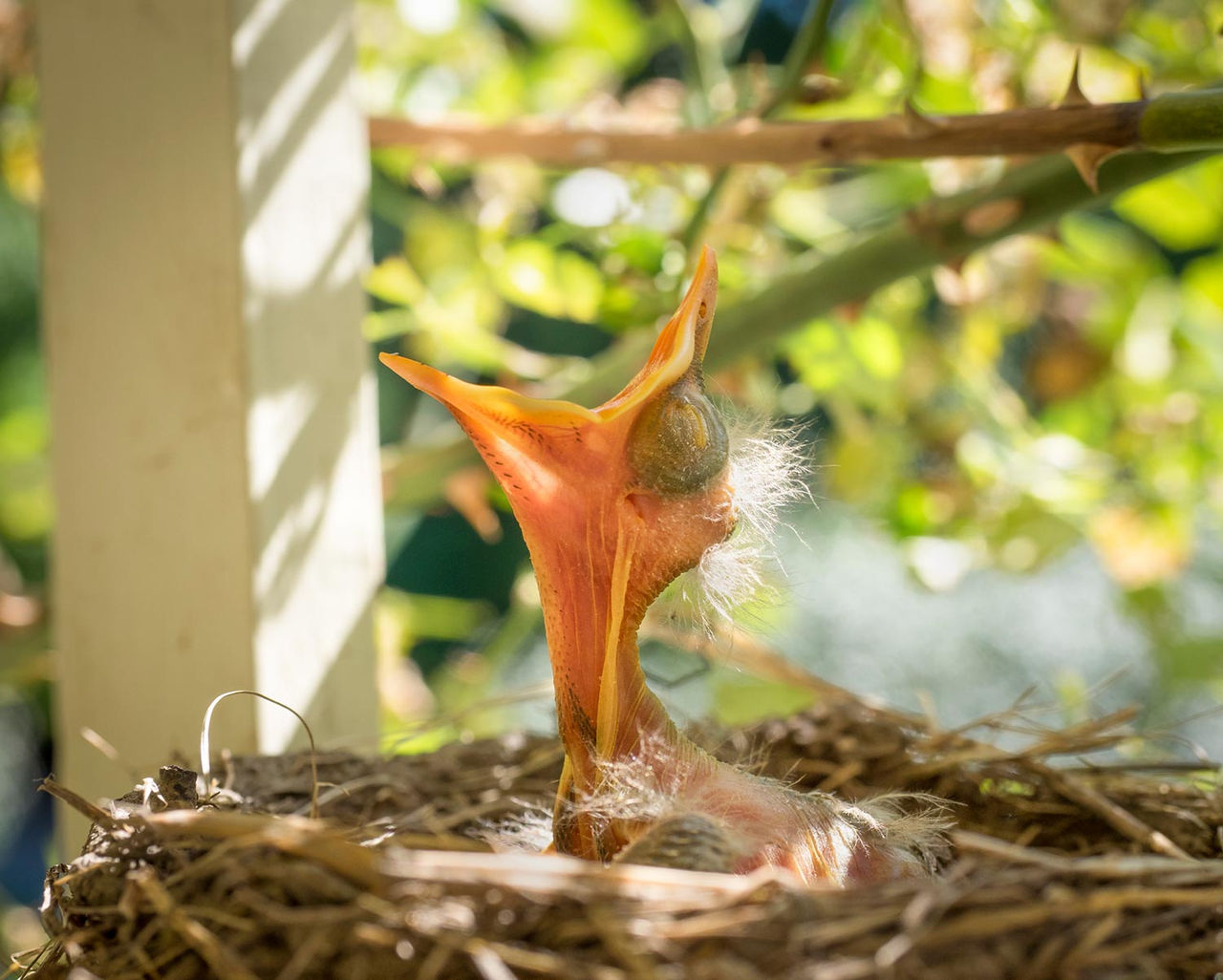
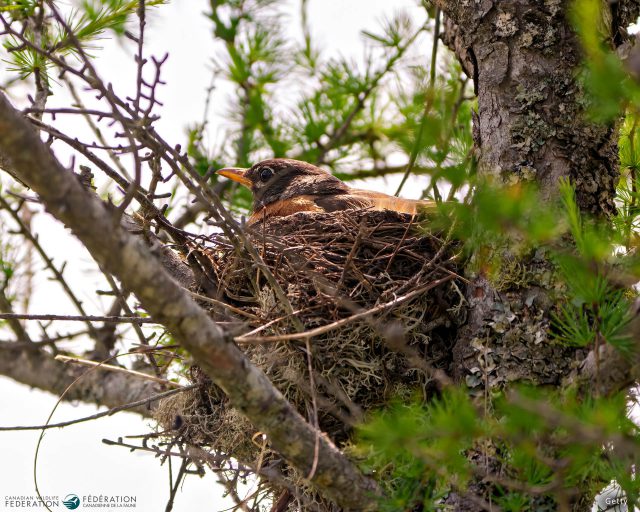
Q. There is a bird nest in my barbecue! What should I do?
A. Birds can choose some odd places to have their nests and in this instance it’s your barbecue! While we may not agree with some of their chosen sites, in most cases there really isn’t much that can be done. That’s because most birds, their nests and their eggs are protected with the Migratory Birds Convention Act (MBCA). They may also receive protection under other legislation including the Species at Risk Act and provincial/territorial laws.
For Canada’s birds protected under MBCA, the Migratory Birds Regulations, 2022 (MBR 2022) state that most nests are protected (nests cannot be damaged, destroyed, disturbed or removed) when they contain a live bird or a viable egg.
While this next bit probably doesn’t pertain to your situation, I’ll mention it just in case. Under MBR 2022, there are 18 species of migratory birds that either re-use their nests or their nests are often used by other bird species, and those nests have longer protection times/waiting periods – 12 months, 24 months or 36 months depending on the species. If a nest belonging to one of these 18 species hasn’t been used by a migratory bird for the duration of the waiting period, then it can be considered abandoned. For these situations, a notification for the unoccupied nest must be submitted through Environment and Climate Change Canada’s Abandoned Nest Registry and their conditions must be met before the nest is disturbed, damaged, removed or destroyed. These species and their associated waiting periods are listed on Schedule 1 and can be found on Fact sheet: Nest Protection under the Migratory Birds Regulations, 2022 - Canada.ca
Even if the nest in your barbecue doesn’t belong to one of the bird species covered by MBCA, it could still be covered by other legislation so be sure to check with the Species at Risk Act and with your provincial/territorial wildlife government department(s) before taking any actions.
In the meantime, minimize disturbance by keeping your distance and limiting activity in the area. It won’t be long until you can safely use your barbecue once again!


