


-
Aquatic Species
2026-05-21
A great threat to the recovery of many whale, turtle and shark species at risk in Canadian waters is their unintentional catch in commercial fishing gear. Wimmer and her team worked towards establishing a process that will help fishermen identify actions that can significantly reduce the bycatch of non-target species at risk in Atlantic waters. They achieved this by working hand in hand with fishermen to ensure their efforts are supported by science and that the fishing industry takes a lead role in developing and implementing the plans.
-
Aquatic Species Workshop
2026-05-21
Approximately 120 people from across Atlantic Canada came together for the Species at Risk Stewardship Workshop. Discussions focused on enhancing collaboration in species at risk recovery, volunteer stewardship, and the Habitat Stewardship Program for Species at Risk for species like the striped bass, the eastern ribbonsnake, the right whale and the Atlantic wolffish. The workshop was very educational, inspiring, and overall successful!
-
Atlantic Cod
2025-11-28
Even if it has been several years since the end of commercial fishing, the Atlantic cod’s population remains in trouble. Since researchers know little about whether all populations of Atlantic cod are equally able to recover, it is important to know more about the fish’s genetics and the differences between the populations themselves. To find out, fish from different populations, or different areas, have been and will be reared in captivity, and with the help of a series of experiments, scientist will be able to know more about how they can help the Atlantic cod’s recovery.
-
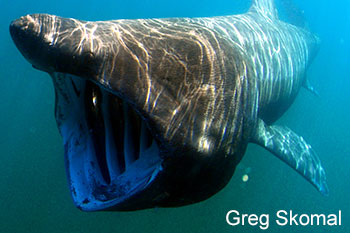
Basking shark
2026-05-21
Basking sharks are the second largest fish in the world. They take 18 years to reach maturity and have a gestation period of approximately two and a half years. These factors make it difficult for population recovery once declines have begun. Globally they are recognized as Vulnerable by the International Union for the Conservation of Nature and in Canada have been designated as Special Concern with the pacific population listed as Endangered by the Committee on the Status of Endangered Wildlife in Canada. To help population recovery, Dr. Andrew Westgate from the Grand Manan Whale and Seabird Research Station assessed the diving and movement behavior of individual basking sharks using data logger tracking tags. This information will be used to assess the risk of mortality due to ship strikes in the commercial shipping corridor in the Bay of Fundy. Dr. Westgate also attached special tracking devices to gather migration information – namely the basking shark’s wintering grounds. This information will allow researchers to assess additional threats to the populations outside the summering grounds.
-
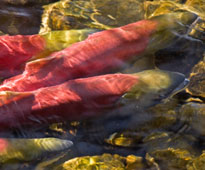
Coho salmon
2026-05-21
Carleton University’s Biology Department researched how salmon in B.C.’s Interior Fraser River interact with fishing gear. In particular, the researchers worked to evaluate the factors that contribute to mortality in salmon that interact with fishing gear.
-
Fish
2026-05-21
Hydropower and water management dams have been known to serve as barriers to fish migration. With fewer fish migrating throughout the watershed, this changes the fish community structure and also the productivity of the system. Very few fishways have been evaluated to determine if they are helping to pass target fish. Cooke and his team tested how effectively the Vianney-Legendre vertical slot fishway helped to pass freshwater fish with the hopes of identifying design criteria that could be incorporated into fishways at dams across Canada.
-
Freshwater Mussels
2025-11-28
Some of our freshwater mussels are species at risk, as they have special needs: their parasitic larva need specific fish species as hosts for a period of their lives. In order to aid in endangered mussel recovery, we need to find out more about them, including: which species of fishes are the hosts necessary for the mussels to complete their life cycle, when the mussels reproduce, what are the optimal conditions for mussel juveniles (both in a lab and in the wild) and what is the critical habitat and needs for each of the species. This data is crucial to help conserve these freshwater mussels.
-
Lake Sturgeon
2026-05-21
Lake sturgeon populations have declined significantly throughout their range. While lake sturgeon harvest has been discontinued in many areas, habitat destruction, fragmentation and degradation remain significant issues in Saskatchewan and elsewhere. The Saskatchewan River lake sturgeon population is assessed as endangered by the Committee on the Status of Endangered Wildlife in Canada (COSEWIC) Saskatchewan Watershed Authority worked towards identifying the preferred habitat of lake sturgeon, the migratory patterns and diet of the fish, as well as their population health and how human activity is making an impact on the fish.
-
Salmon – Bay of Fundy Population
2026-05-21
Knowing which river is responsible for more salmon production is an important element this project has accomplished through systematic recording, characterizing and comparing each river for water quality, salmon health and population density. These findings were compared to the adjacent salmon at sea. The results show which rivers are most healthy and which house the most number of salmons. This greatly assists in determining the critical habitat for at risk Atlantic Salmon populations.
-
Salmon
2026-05-21
The researchers had reason to believe that a fish’s ability to swim for extended periods of time, such as during migration, is affected by the presence of contaminants. This project studied Salmon’s swimming ability and energy expenditure in the presence of contaminants in the water. In addition, the researchers looked at whether salmon species change their behaviour in the presence of contaminants, specifically with those related to oil and gas exploration.
-
Sockeye and Coho Salmon
2026-05-21
Salmon are migratory fish which are born in freshwater systems, spend most of their lives in saltwater and come back to their birth site to reproduce and die. On Canada’s west coast, a great number of coho and sockeye salmon are not making it back alive to where they were born and were dying while travelling up the Fraser River in British Columbia. Coincidentally, there has been a continual rise in the average summer temperature of that same river. To find out if both phenomenon are related, and ultimately determine the interactions between temperature, heart function, and migration success, the heart function of migrating salmon at different temperatures needs to be studied. With this data in hand, we can work to increase the survival rates of migrating salmon in British Columbia.
-
Sturgeon, Lake
2026-05-21
The project identifies and characterizes preferred habitat and critical areas of use by lake sturgeon in the Saskatchewan River Watershed by tracking tagged sturgeon throughout the season The information gained in habitat assessment and the tracking study will go to create a River 2D model which will depict the sturgeon’s habitat and food resources. The information will be essential for water managers and regulatory agencies to use in order to predict impact of current management strategies, trends in flow by climate change or droughts.


