

SCIENTIFIC NAME
Sternotherus odoratus
OTHER COMMON NAMES
Stinkpot, Common Musk Turtle
DESCRIPTION
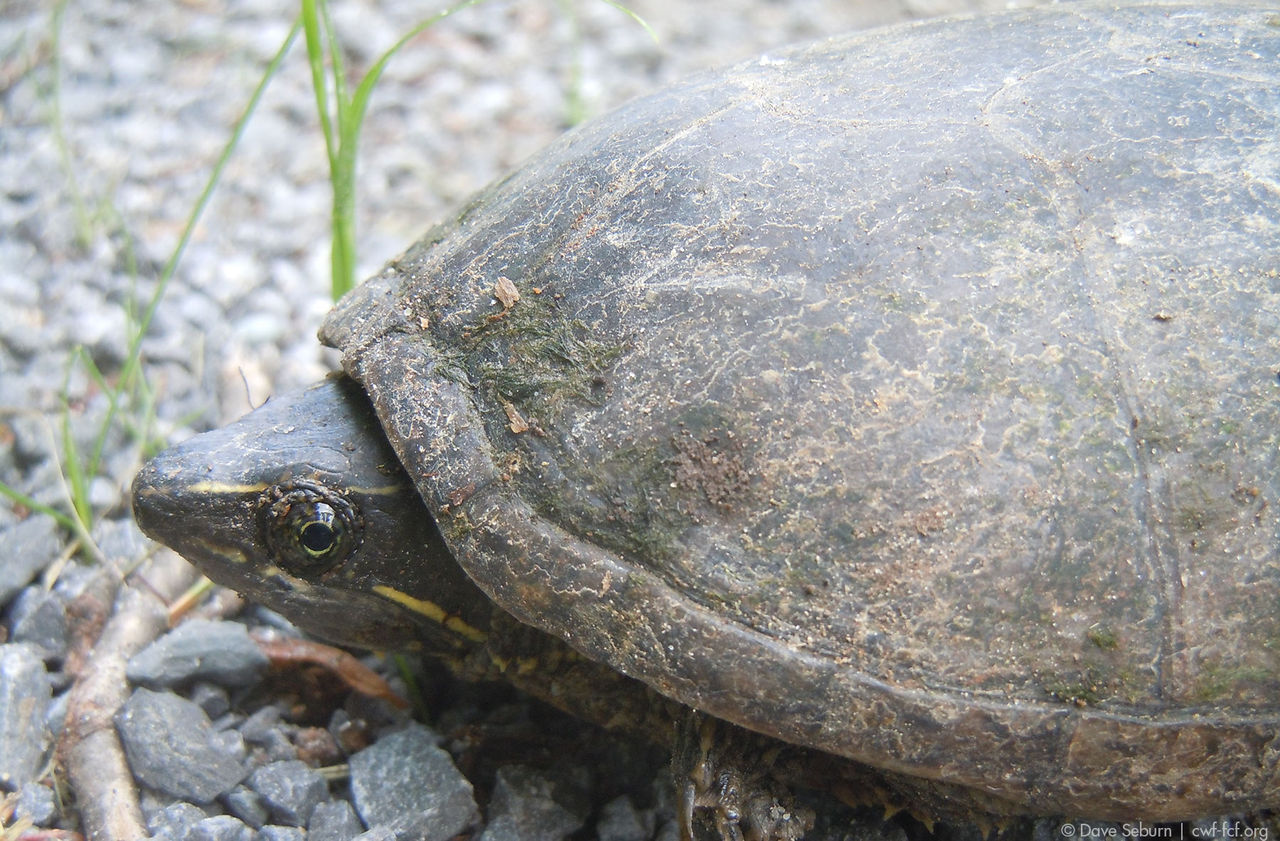
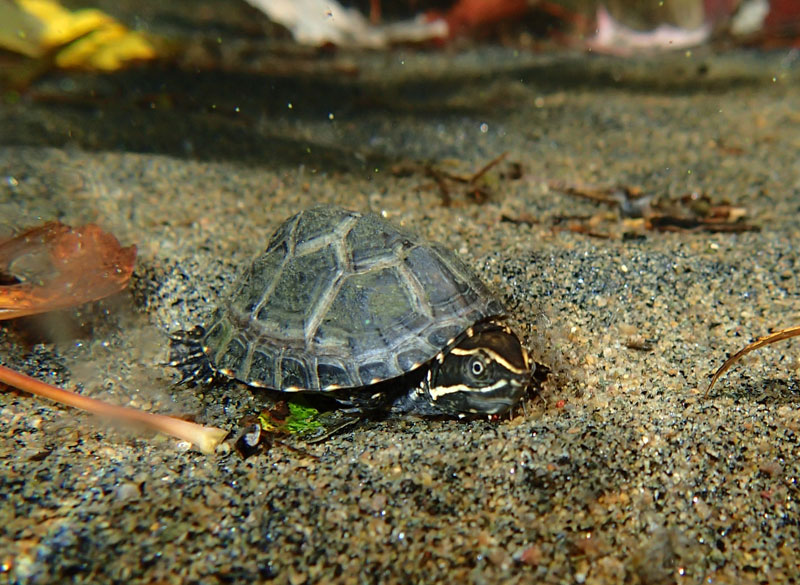
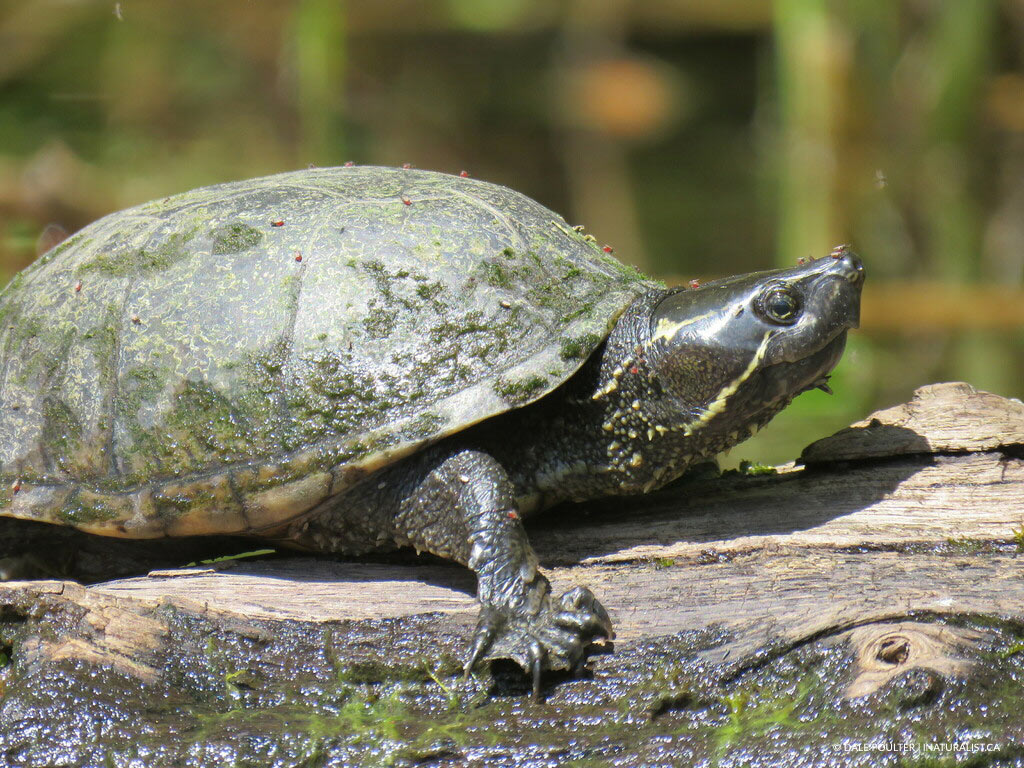
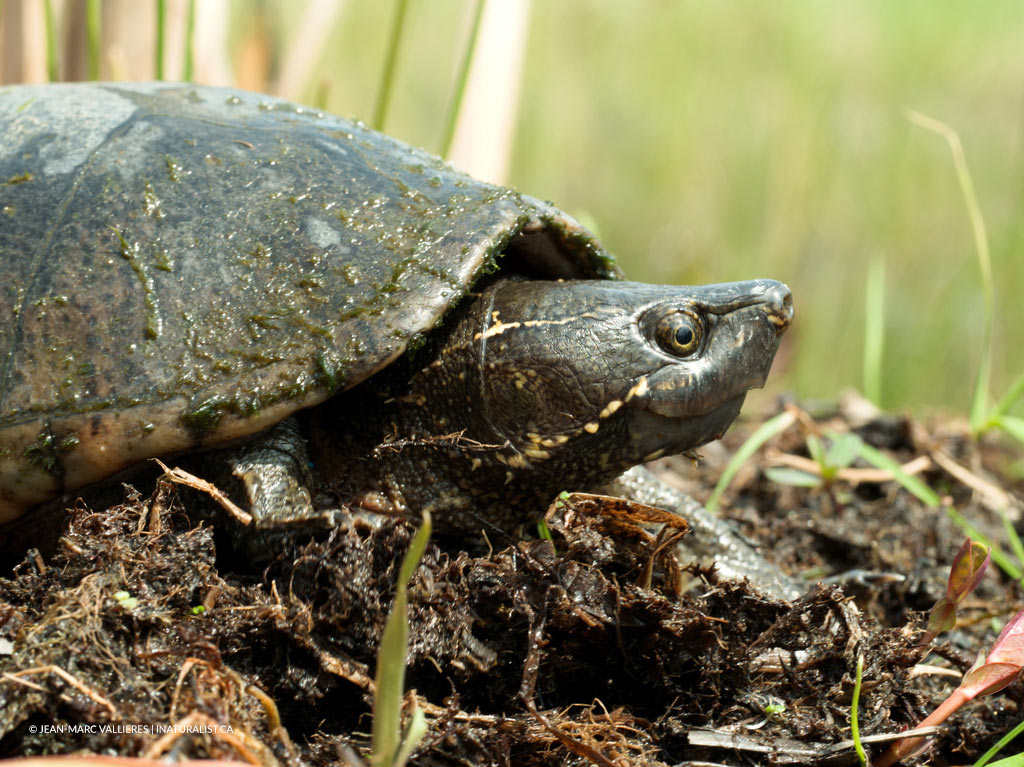
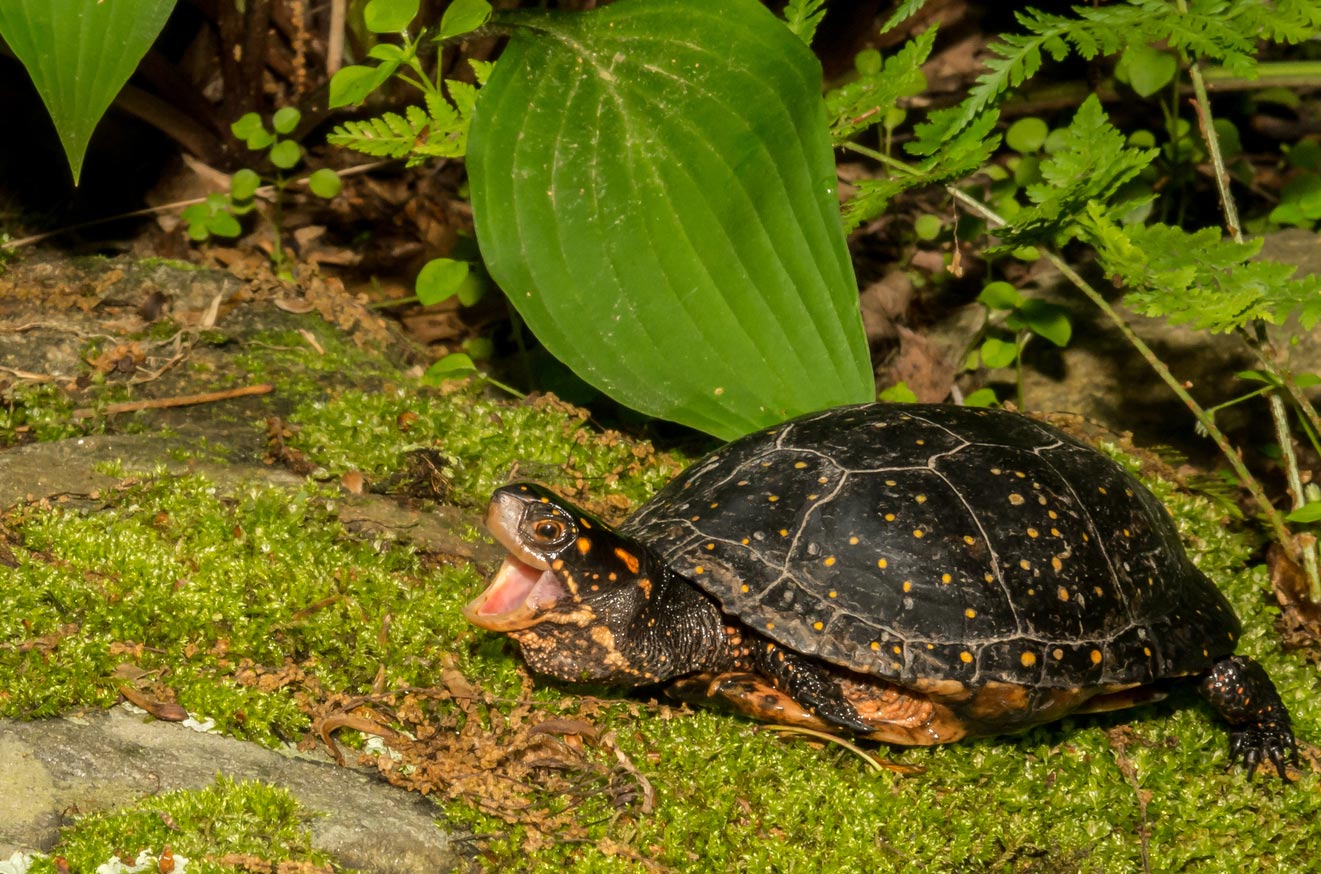
The Eastern Musk Turtle has a narrow, highly arched shell. The shell and body are brownish, but usually Eastern Musk Turtles have two stripes on the side of the head, one above and one below the eye. When disturbed, the turtle can produce a musky, skunk-like scent.
PHOTO GALLERY
|  |  |
RANGE
Southern Ontario and southern Québec
HABITAT
Eastern Musk Turtles live in shallow lakes, rivers, marshes and ponds with soft, muddy bottoms and a slow current. Females nest in open areas along shorelines or in muskrat lodges. In winter, Eastern Musk Turtles hibernate under water on the bottom of lakes and wetlands.
BEHAVIOUR
Eastern Musk Turtles are very aquatic and are rarely found far from water. They do not reach maturity until four to eight years of age. Female Eastern Musk Turtles lay one clutch of two to five eggs on land in June. The sex of the hatchlings is determined by the temperature of the nest during incubation. The hatchlings emerge in the late summer or early fall.
Adult size: 9-12 cm
STATUS
Special Concern (Federal)
THREATS AND/OR WHAT YOU CAN DO
Wetland destruction and the development of natural shorelines is a threat to this species. Eastern Musk Turtles commonly bask at the surface of the water and this puts them at risk of being hit by boat propellers. Commercial fishing traps can catch and drown Eastern Musk Turtles in some areas.
NOTES
Did you know? Rather than basking on logs in the water like most other freshwater turtles, Eastern Musk Turtles usually bask at the water’s surface, under floating aquatic vegetation, like lily pads.

Learn More
- 0


