

SCIENTIFIC NAME
Glyptemys insculpta
DESCRIPTION
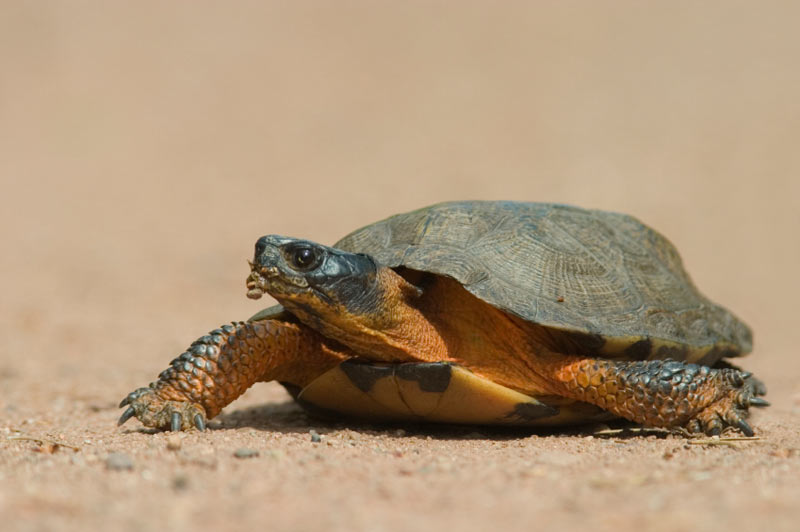
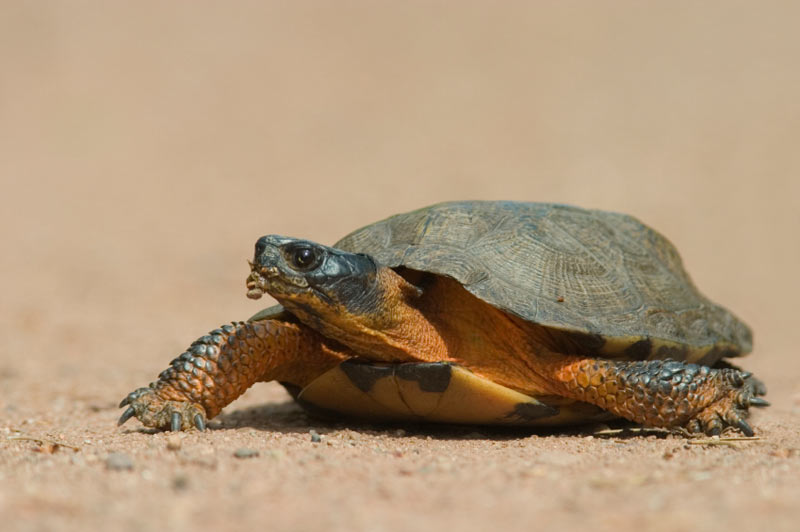
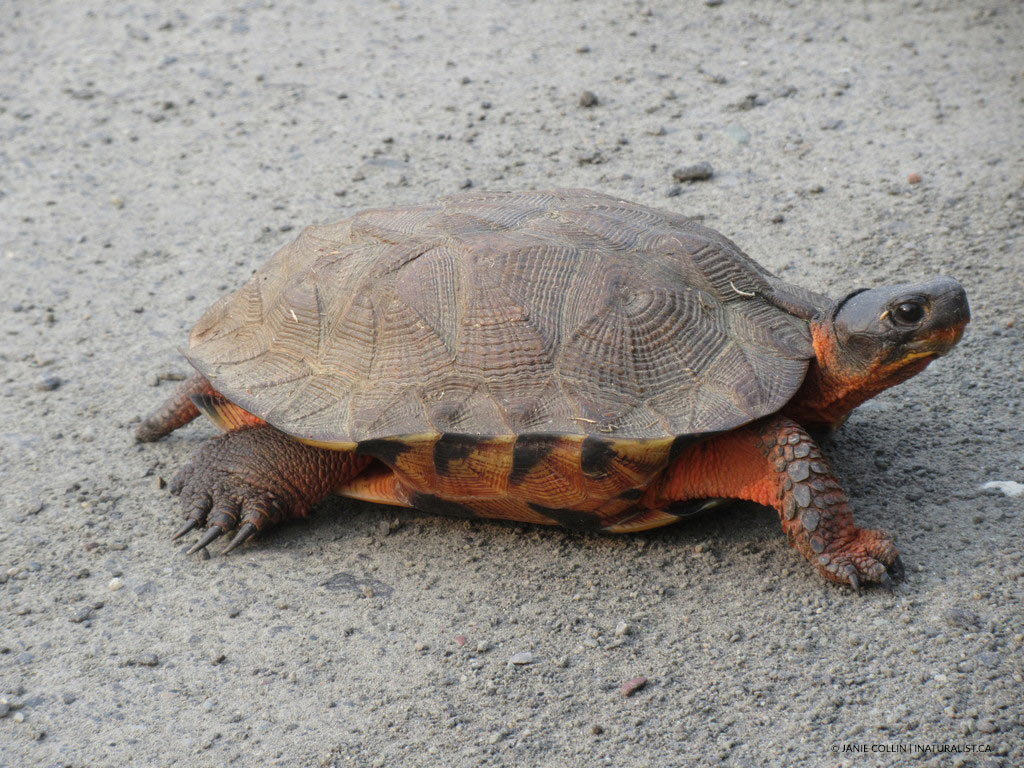
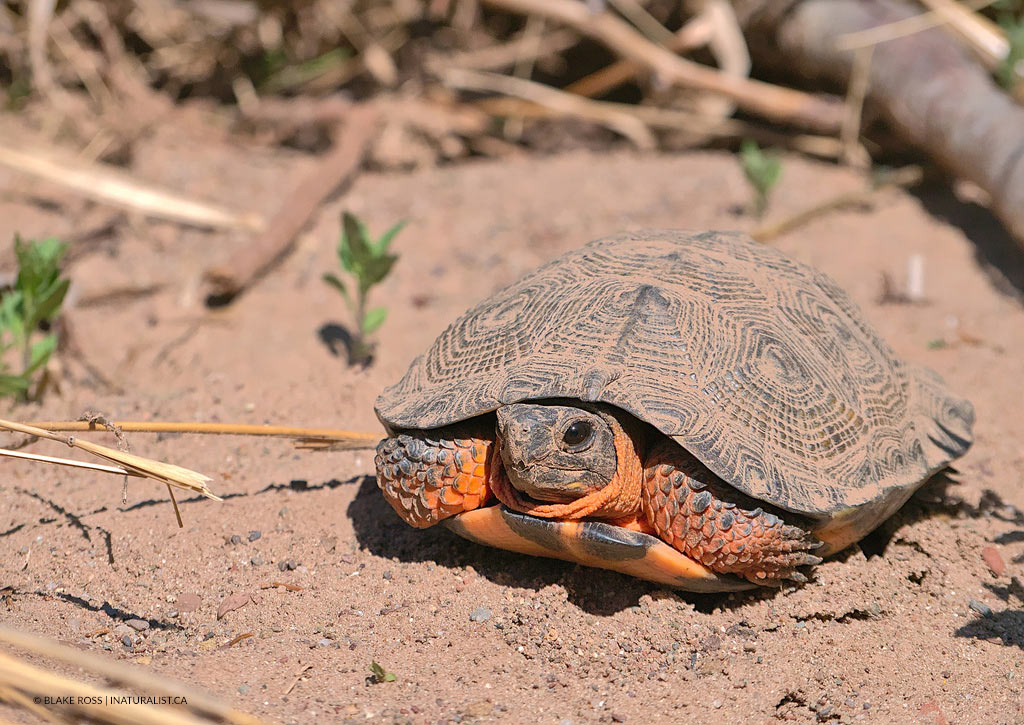
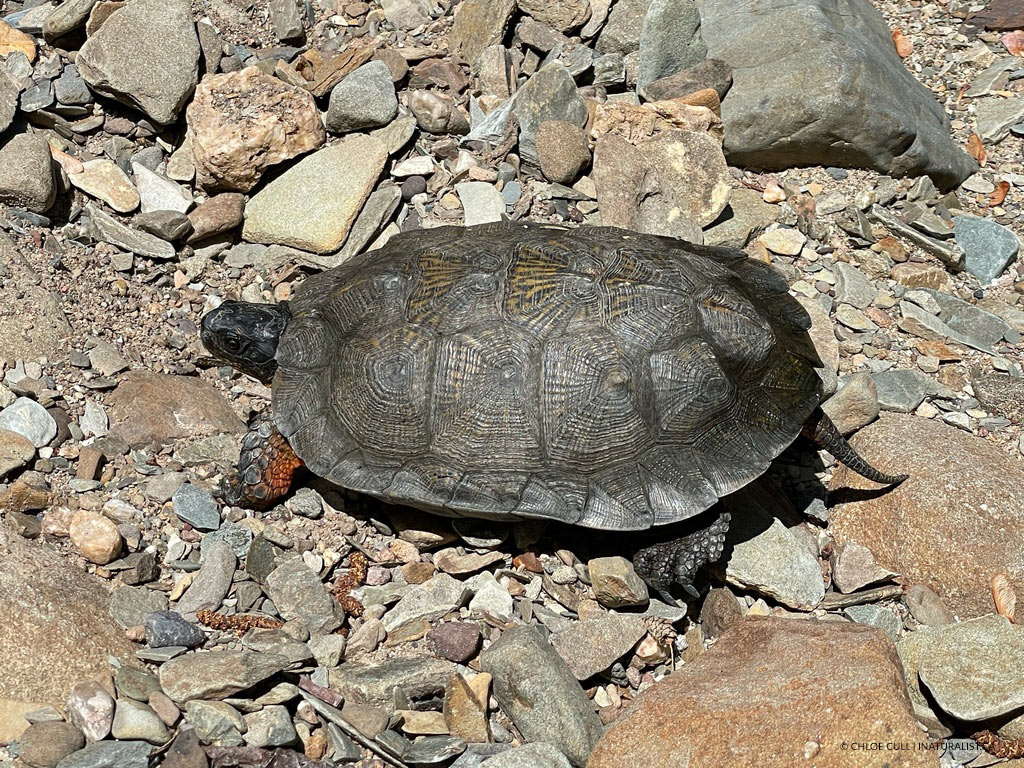
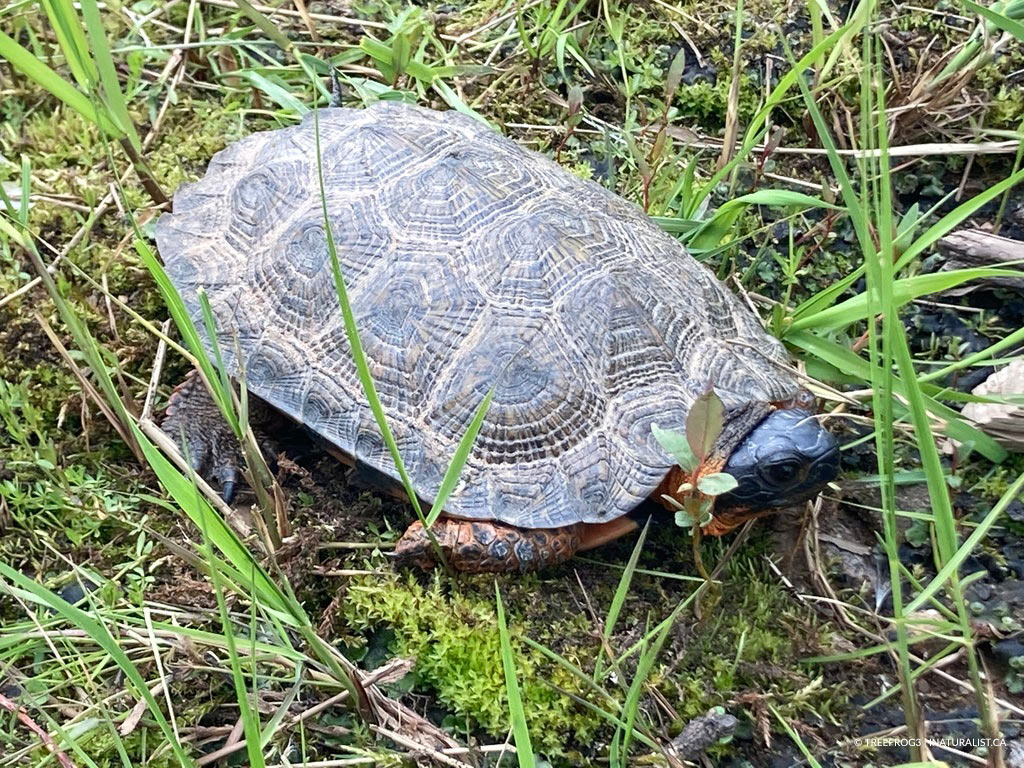
The Wood Turtle’s upper shell has raised, pyramidal shapes with visible concentric growth rings that resembles wood. There is distinct orange colouring on its neck and forelegs.
PHOTO GALLERY
 |  |  |
 |
RANGE
Southern Ontario, southern Québec, New Brunswick, and Nova Scotia
HABITAT
Wood Turtles live in moderately flowing, meandering streams and rivers with sandy or gravelly bottoms. They also make use of open areas such as meadows and hayfields as well as forested areas within a few hundred metres of the river. Females nest in open areas close to the river or on sand and gravel bars along the river. In winter, Wood Turtles hibernate under water on the bottoms of rivers.
BEHAVIOUR
Wood Turtles are fairly terrestrial and spend much of the summer on land. They do not reach maturity until 14 to 18 years of age. Female Wood Turtles lay one clutch of three to 20 eggs in June. Unlike many species of turtles, the sex of the hatchlings is determined by genetics, not the temperature of the nest. The hatchlings emerge in late summer or early fall.
Adult Size: 14-23 cm
STATUS
Threatened (Federal)
THREATS AND/OR WHAT YOU CAN DO
Haying machines kill many Wood Turtles each year when the turtles are foraging in hayfields. Shoreline development is a threat in some areas. Illegal collecting of Wood Turtles for the pet trade is a serious threat across the range.
NOTES
Did you know? Wood Turtles stomp on the ground to entice earthworms come to the surface allowing the turtles to eat the worms.

Learn More
- 0


