


Name/Org : Maria Franke/Toronto Zoo
Status:Completed
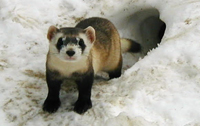
DESCRIPTION The Toronto Zoo worked to reintroduce 34 black-footed ferrets back into their native habitat in Grasslands National Park. Afterwards zoo staff visited the site to count, trap and examine the ferrets as a long term strategy to recover the species. CWF assisted over a period of three years in two key components of the release: the monitoring of the ferrets after their release as well as education programming.
Results:Approximately 30 days after the release of black-footed ferrets to the Grasslands National Park in 2009, zoo staff visited the park to monitor the ferrets and found 65 per cent of the released ferrets. That spring, researchers found 35 per cent of the colony had survived the winter (a similar survival rate as other reintroduction sites in the U.S.). Then in August, researchers found four dog towns (Larson, Monument, Dixon and Snakepit). These dog towns are created when the ferrets take over the dens of their prey, black tailed prairie dogs. The Snakepit dog town held four adult ferrets (one male and three females), as well as a litter of three kits (one male and two females). Another of the three adult females appeared to be lactating but it appeared her kits were still underground. At the remaining dog towns, female ferrets were identified but no litters were apparent. Unfortunately, there was a low male survival rate in 2009 and as a result, four females did not breed the following year.
Since sylvatic plague has been the primary challenge of black-footed ferret survival (they contract the plague via fleas from their main prey – black tailed prairie dogs), Parks Canada dusted one-third of the black tailed prairie dog colony area (32, 502 black tailed prairie dog burrows) in hopes of keeping fleas at bay.
Finally, researchers released 15 more ferrets in to the Grasslands National Park on September 23, 2010, with a focus on getting more males released into towns were females exist to encourage reproduction.


