-
Guides, Infographics & PostersGuides, Infographics & Posters
Take a closer look at the ways in which we’ll help you access the facts about wildlife. Whether it’s discovering the Hinterland Who’s Who animal fact sheets, or ordering our handy field guide to Canada’s prevalent shoreline species. This content is available to our CWF Supporters and online members. Please sign in to order your free materials.
More -
-
Wildlife E-cards
Wildlife E-cards
Send Dad a wildlife e-card! You cherish our wonderful wildlife and now you can send e-greetings that reflect your love of nature. We have developed a wide array of wildlife ecards for every occasion for you to share with your family and friends!
More -
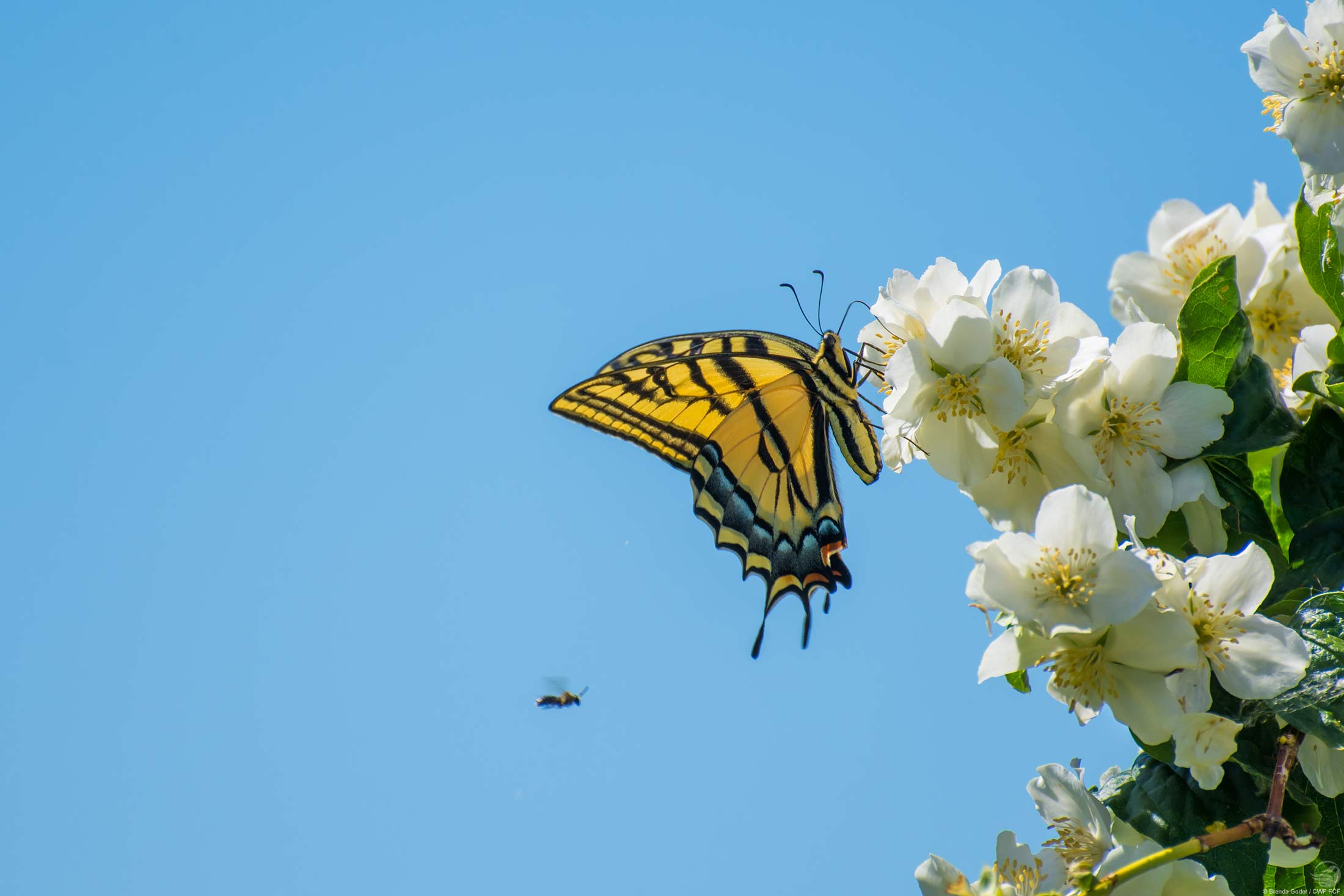
CWF WallpapersCWF Wallpapers
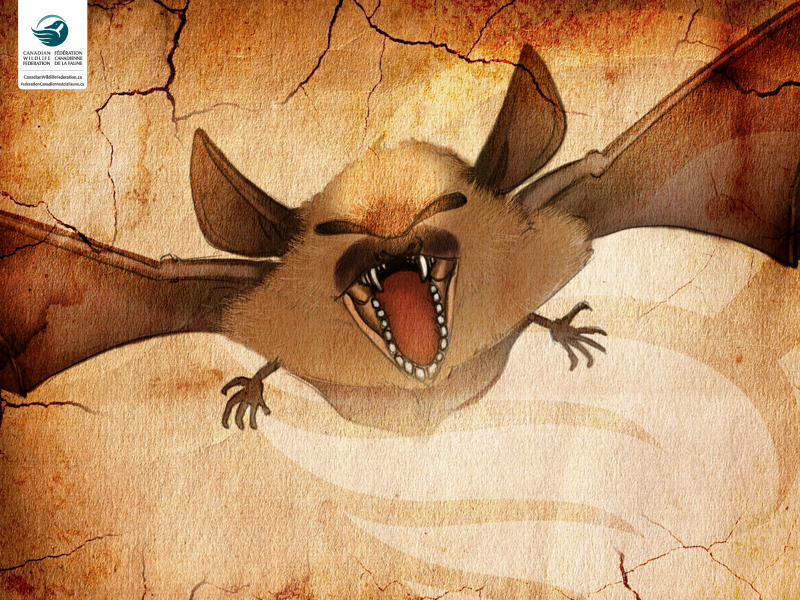
Your desktop is the perfect habitat for this wild wallpaper. Download CWF wallpapers!
More -
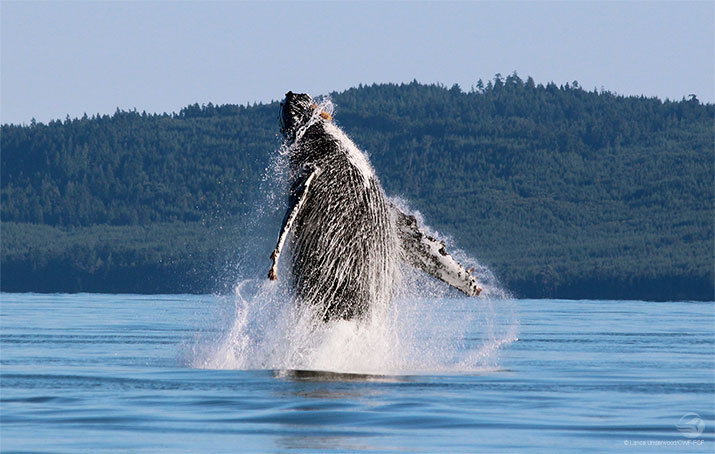
WILD WebinarsWILD Webinars
With topics relating to conservation, wildlife and habitat, we provide a relevant online learning platform, typically for grades four to six but of benefit to any age.
More

From easy-to-use apps designed as tools for your citizen science projects to picturesque wallpaper images for your computer, CanadianWildlifeFederation.ca offers a variety of useful downloads for your PC and mobile devices.
Coasts & Oceans
-
Following Leatherback Sea Turtles as they Migrate to their Southern Nesting Grounds
2016-02-28
A leatherback turtle presentation by Dr. Sean Brilliant, Manager of Marine Programs for CWF, and Kathleen James, Canadian Sea Turtle Network.
-
Marine Animal Response & Necropsy Webinar and Q&A
2020-07-20
Every year, more than 1,000 marine animal incidents are reported in Canada. Sean and Tonya will discuss the importance of responding to marine animal emergencies, and the essential conservation role you and other Canadians can play by reporting incidents. Sadly, some of these incidents have tragic endings. When a marine animal dies, a necropsy (or autopsy) can help us better understand and conserve marine wildlife. Tonya will share her experience participating in North Atlantic Right Whale necropsies, and we’ll discuss ways we can work together to conserve this important and critically endangered species.
-
Saving North Atlantic Right Whales
2020-06-08
Join the Ocean Tracking Network (OTN) and the Canadian Wildlife Federation (CWF) on World Oceans Day for a talk on the North Atlantic right whale—one of the most endangered whales in the world—that relies on the plankton-rich waters of the Maritimes, and faces dire threats from ship strikes, fishing entanglements and climate-driven changes in food sources and habitat. Historically found throughout the Atlantic Ocean, today North Atlantic right whales overwinter and calve in the south between Georgia and Northern Florida, and move north to Canada to feed in the plankton-rich waters of the Bay of Fundy, off the Scotian Shelf, and in the Gulf of St. Lawrence in the summer. After centuries of whaling, populations of some whale species have rebounded, but entanglements and ship strikes remain a serious problem for the conservation of large baleen whales, including for North Atlantic right whales. Due to human-induced stressors as well as lower calving rates since 2010, experts predict that right whales could become extinct in as little as 20 years. Tune in to learn more from Canadian Wildlife Federation’s right whale expert Sean Brillant about how we can work together to ensure a future for this iconic and critically endangered species.
-
A Deep Dive Into the Lives of North Atlantic Right Whales
2020-12-09
Date: Wednesday, December 9, 2020 at 12:00 p.m. EST | 1:00 p.m. AST Speakers: Dr. Sean Brillant, senior conservation biologist at CWF; Dr. Kim Davies, adjunct professor (FGS), oceanography Join the Ocean Tracking Network (OTN) and the Canadian Wildlife Federation (CWF) for the third live webinar in our North Atlantic right whale series. This time, you’re invited to a conversation and Q&A with Dr. Sean Brillant, senior conservation biologist at CWF, and Dr. Kim Davies, adjunct professor (FGS), oceanography, co-PI MEOPAR-WHaLE.
-
Connecting With Nature
-
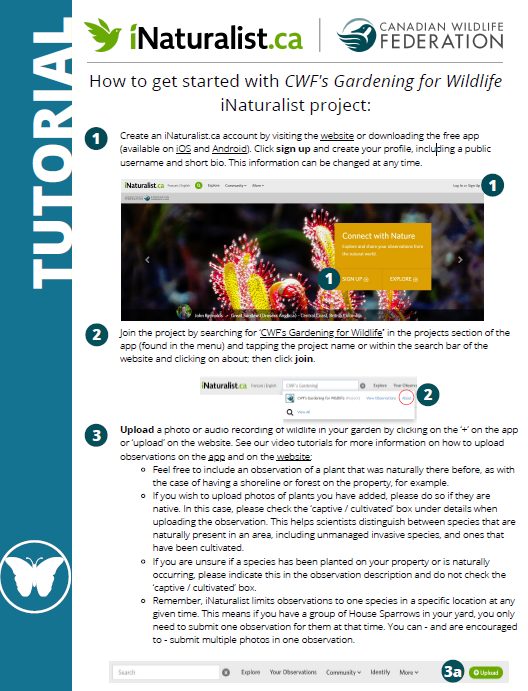
How to get started with CWF's Gardening for Wildlife iNaturalist project
2021-04-09
Create an iNaturalist.ca account by visiting the website or downloading the free app(available on iOS and Android ). Click sign up and create your profile, including a publicusername and short bio. This information can be changed at any time.
-

Certify Your Garden Handout
2026-07-02
Whether you are limited to a small patio or have hectares of land, CWF would like to acknoledge your efforts in welcoming wildlife to your garden.
-
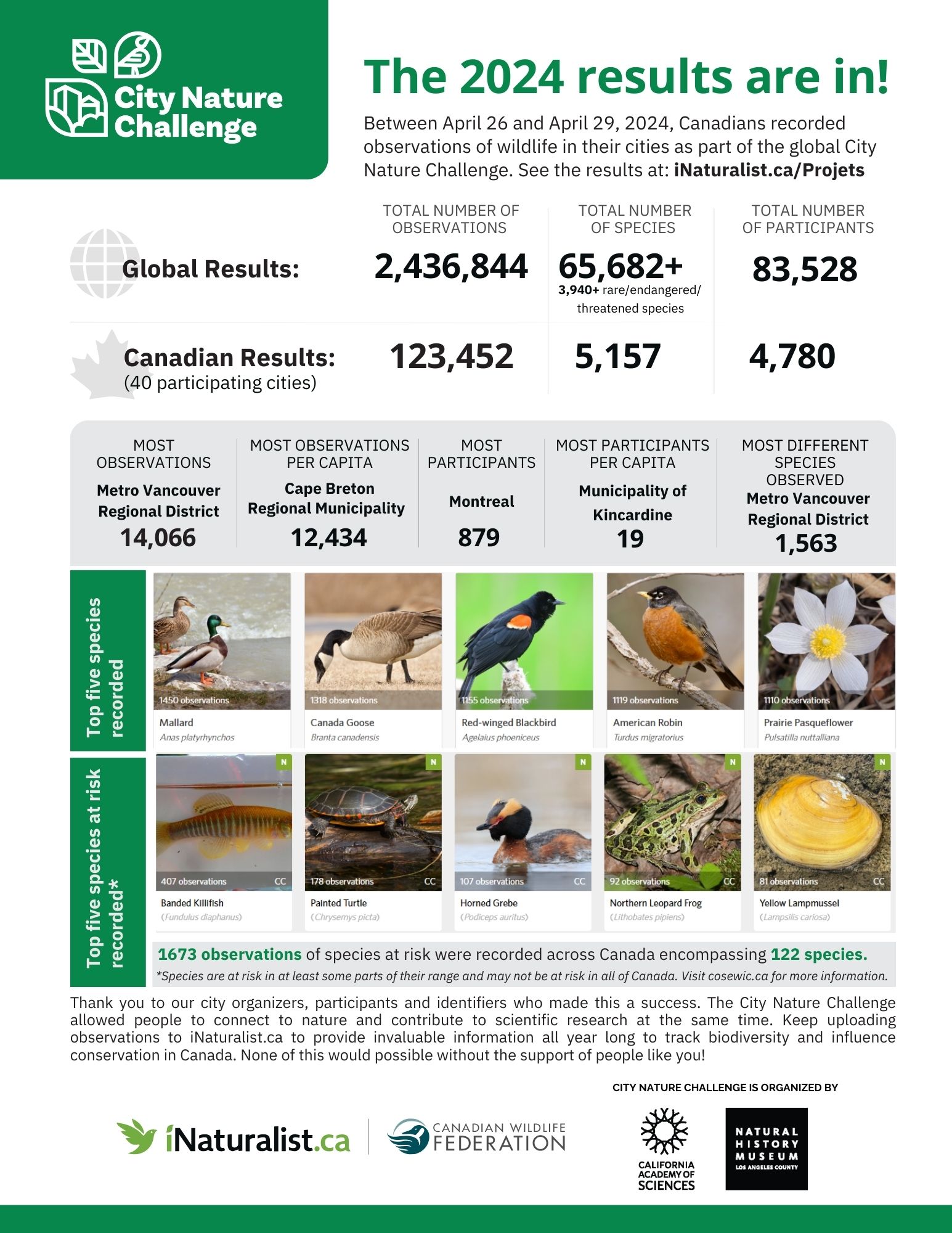
The City Nature Challenge 2024 Results Are In!
2024-05-07
-
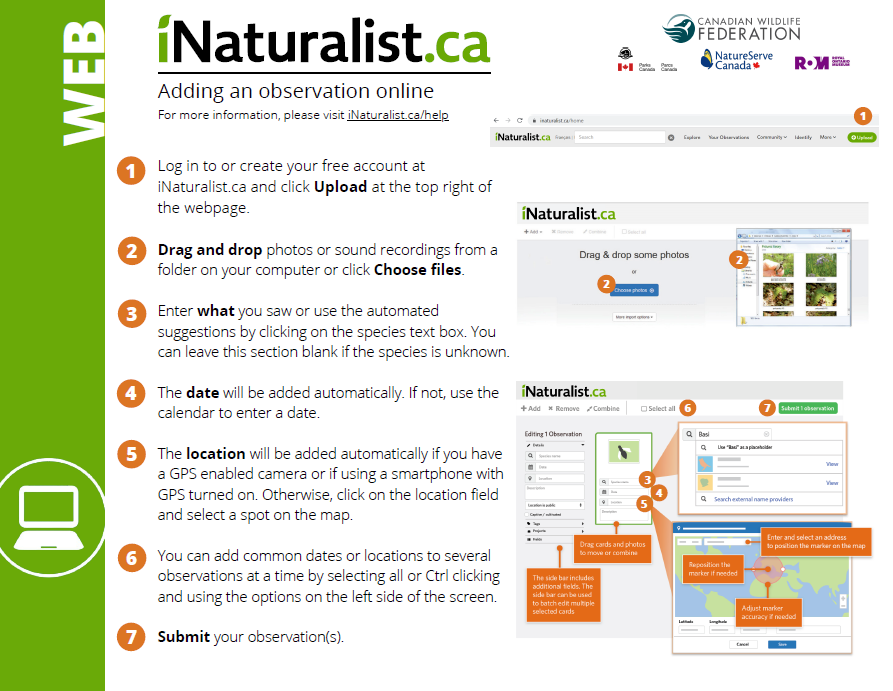
Adding an observation online
2021-04-13
-
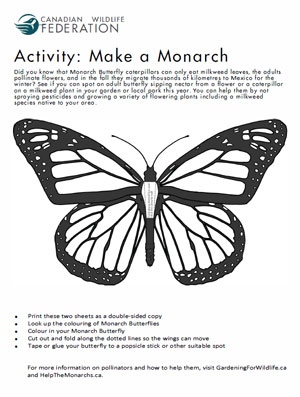
Monarch Butterfly Activity Sheet
2026-07-02
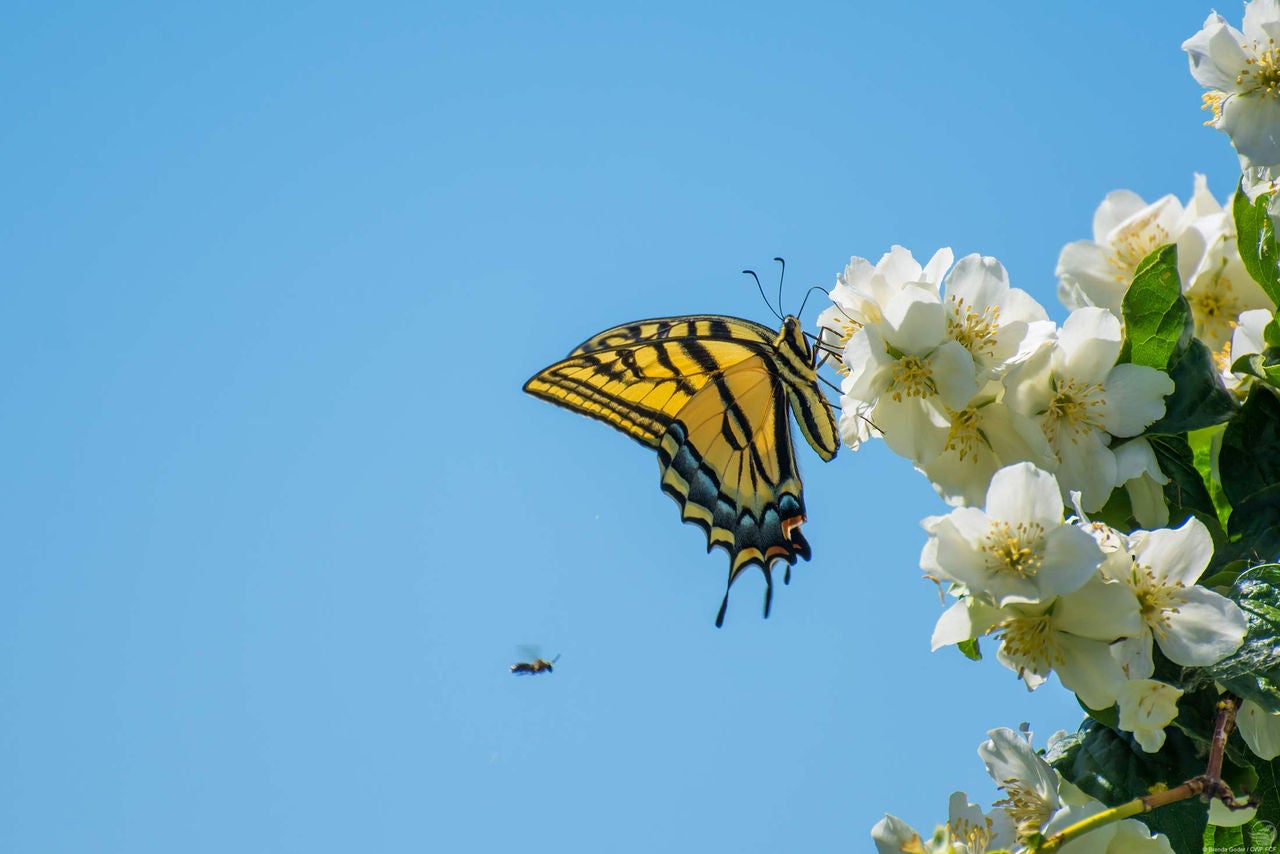
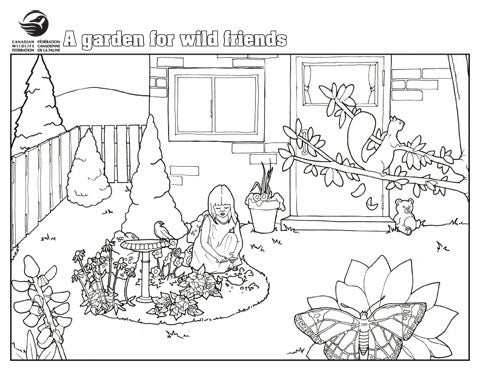
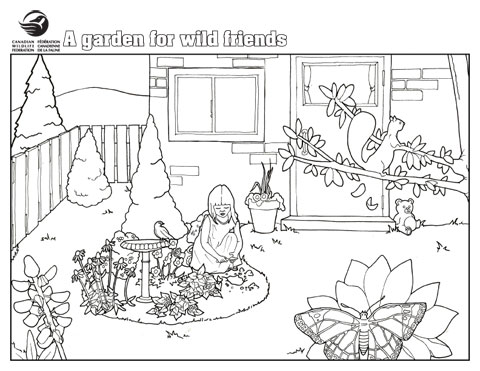
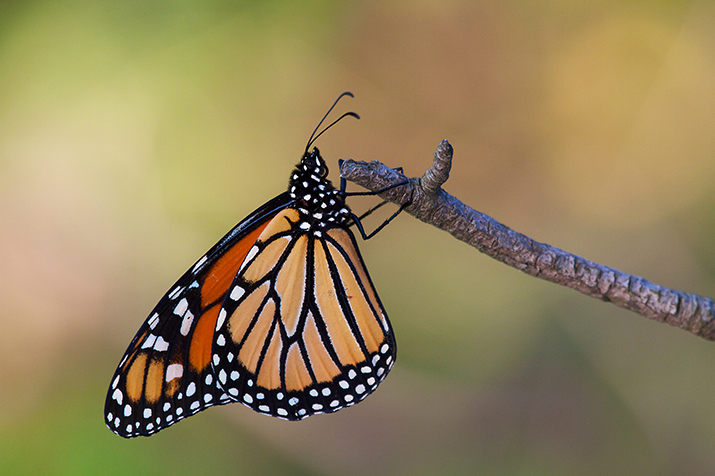
Did you know that Monarch Butterfly caterpillars can only eat milkweed leaves, the adults pollinate flowers, and in the fall they migrate thousands of kilometres to Mexico for the winter? See if you can spot an adult butterfly sipping nectar from a flower or a caterpillar on a milkweed plant in your garden or local park this year.
Education & Leadership
-
Discover Canada’s Native Bees (French Only)
2020-07-21
Join Cécile Antoine -PhD Candidate in Biology at UOttawa- on her journey to discover native bees that you may encounter in your gardens and parks around Ottawa, or the rest of the country. Cécile will share her passion by giving details on the biology and ecology of wild bees. She will also explain her research findings on bees that nest in the ground, which represent ¾ of the species, and is the focus of her studies. Learn more on how to support wild bees by attending this webinar!
-
Gardening with Wildlife in Mind
2024-05-22
Join CWF as we explore the key ‘ingredients’ in a beautiful yet beneficial garden that will support local and migratory wildlife right outside your door. In addition to learning these important components, you’ll come away with ideas in how to apply them that will suit any property, lifestyle, budget or space.
Endangered Species & Biodiversity
-
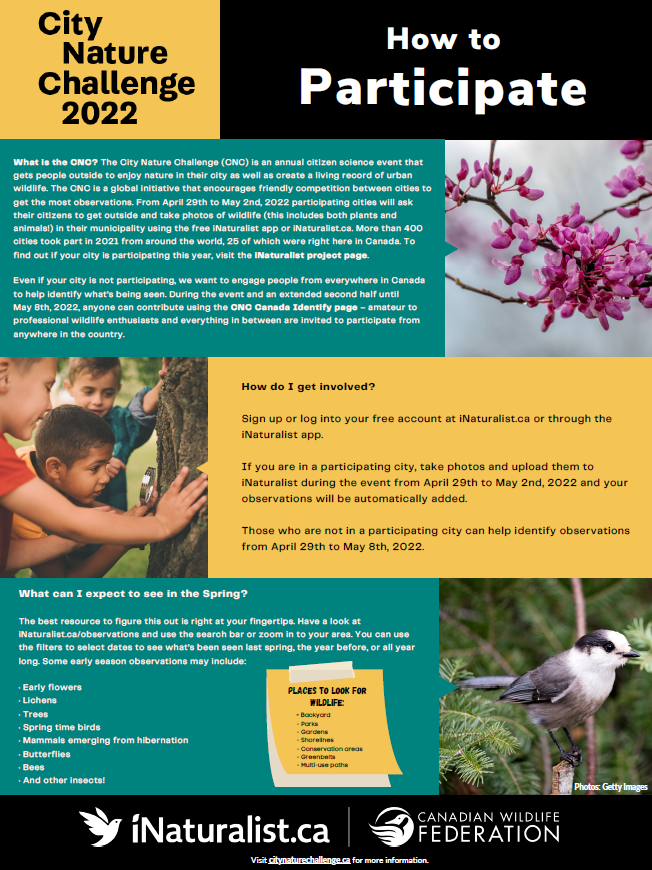
How to Participate in the City Nature Challenge
2026-07-02
What is the CNC? The City Nature Challenge (CNC) is an annual citizen science event thatgets people outside to enjoy nature in their city as well as create a living record of urbanwildlife. The CNC is a global initiative that encourages friendly competition between cities toget the most observations. From April 29th to May 2nd, 2022 participating cities will asktheir citizens to get outside and take photos of wildlife (this includes both plants andanimals!) in their municipality using the free iNaturalist app or iNaturalist.ca. More than 400cities took part in 2021 from around the world, 25 of which were right here in Canada. Tofind out if your city is participating this year, visit the iNaturalist project page .
-
-
-
-
Forests & Fields
-
Certify Your Garden Handout
2026-07-02
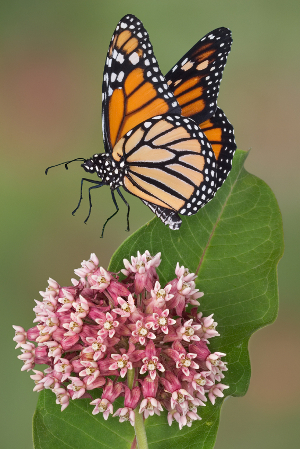
Whether you are limited to a small patio or have hectares of land, CWF would like to acknoledge your efforts in welcoming wildlife to your garden.
-
Native Seed Calculator and Companion Guide
2023-02-01
When beginning a pollinator habitat restoration project, selecting a native seed mix appropriate to your project region and site conditions is crucial. But how do you know what species to include, and how much of each species? How can you estimate how much seed you might need and what it might cost? Join Botanist and Restoration Ecologist, Stefan Weber, as he leads us through a new tool—a seed calculator that will assist rights-of-way managers conducting pollinator habitat restoration projects.
-
Wild About Bees Poster
2026-07-02
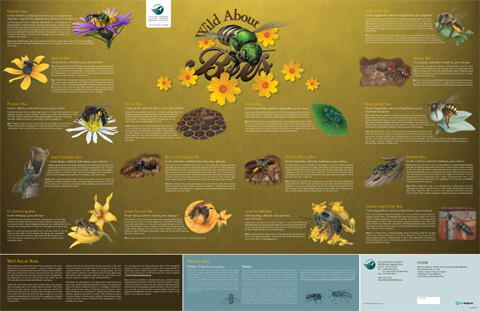
Approximately one-third of all human food is prepared from plants that depend on animal pollinators — and bees make the biggest contribution. The most familiar bee is the honey bee (Apis mellifera), which was introduced from Europe almost 400 years ago. Although we may first picture the honey bee when we think of pollinators, our native bees, such as the bumble bee or the mason bee, are often actually more effective and efficient pollinators. Unlike the social honey bee, which shares labour and caretak-ing of its young, most of our native bees are solitary. This means that each female prepares her own nest, provisions it with food (nectar and pollen) for her offspring, lays her eggs and provides little further care.
-
The Basics of Wildlife-friendly Gardening (printer-friendly version)
2026-07-02
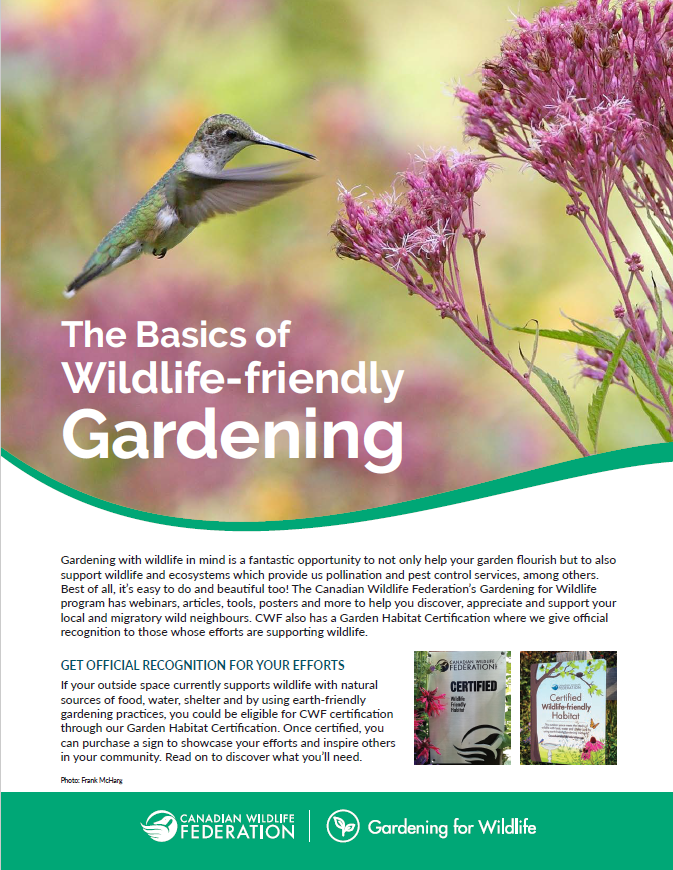
Gardening with wildlife in mind is a fantastic opportunity to not only help your garden flourish but to also support wildlife and ecosystems which provide us pollination and pest control services, among others. Best of all, it’s easy to do and beautiful too! The Canadian Wildlife Federation’s Gardening for Wildlife program has webinars, articles, tools, posters and more to help you discover, appreciate and support your local and migratory wild neighbours. CWF also has a Garden Habitat Certification where we give official recognition to those whose efforts are supporting wildlife.
-
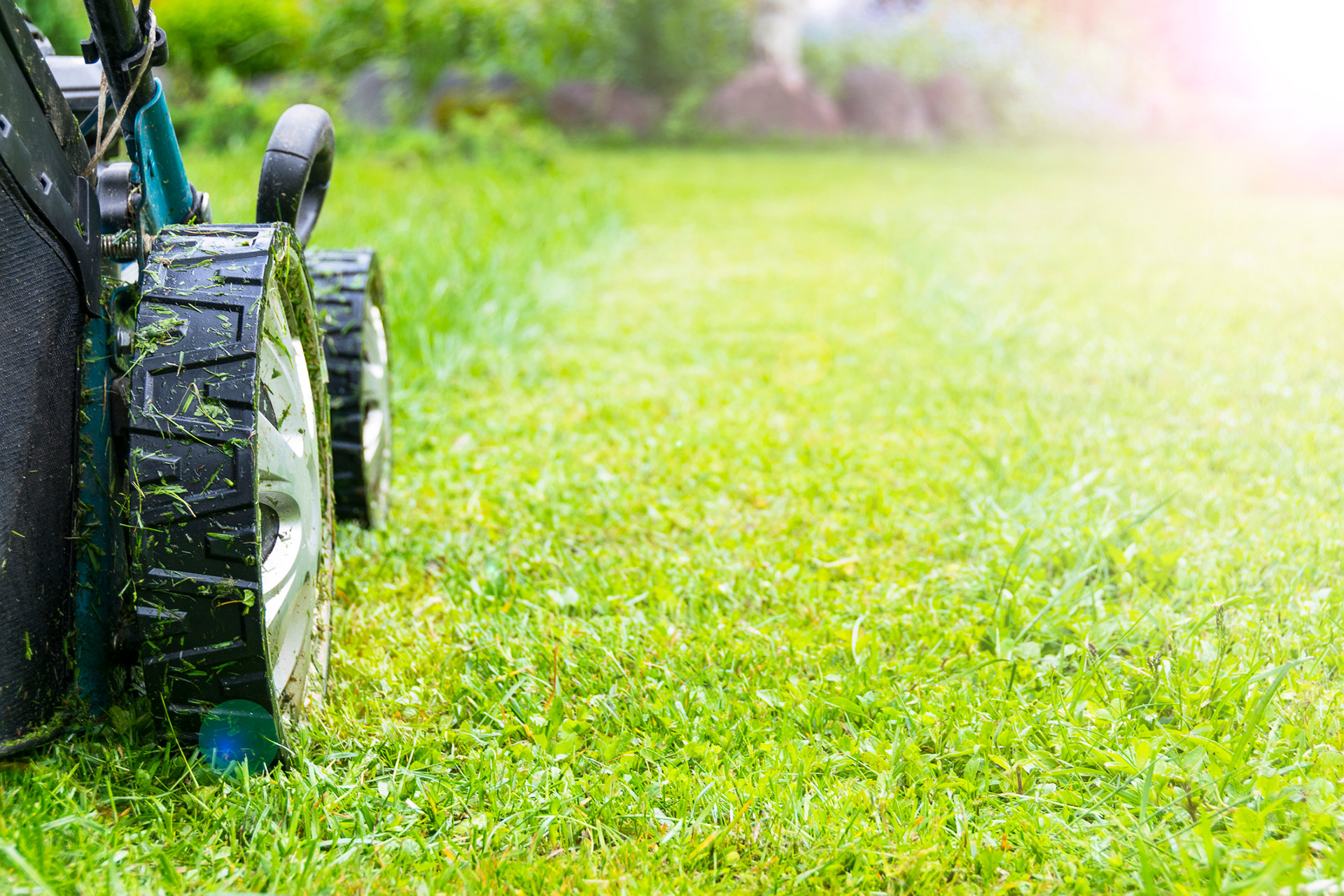
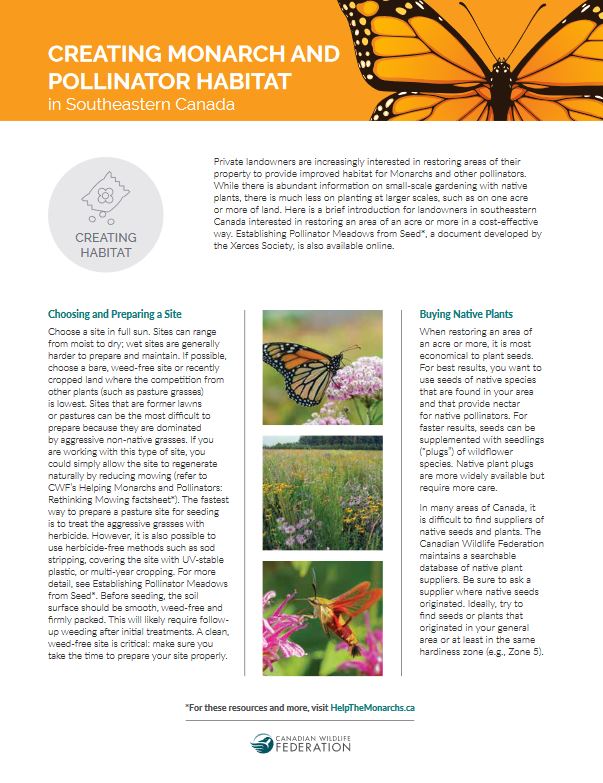
Helping Monarchs and Pollinators: Rethinking Mowing
2019-05-07
Pollinators are a priority resource concern for many conservationists and farmers. The Xerces Society conducted field trials throughout the Easter, Midwestern and Western United States to inform best practices.
Lakes & Rivers
-
The Canadian Aquatic Barriers Database
2021-06-14
June 14, 2021, 12:00 – 1:00 p.m. ET. A Tool to Support Fish Passage and Connectivity Work in Canada. Please join the Canadian Wildlife Federation as we introduce to you the Canadian Aquatic Barriers Database (CABD) — an open web tool to identify, explore and map potential barriers to aquatic connectivity. You will learn how the CABD will support policy and reporting, restoration planning and prioritization, infrastructure management, research and education and outreach.
-
Let's Talk Turtles
2022-05-18
How to help Canada’s At Risk Turtle Populations: Turtles are a vital part of healthy ecosystems. Although they have been around for millions of years, today, all eight of Canada’s freshwater turtles have been designated as Species at Risk. This webinar will discuss why turtles are in danger, how you can make a difference, and how turtles are culturally significant to Indigenous Peoples of North America.
-
Learning and Engagement Dialogue: Financing Aquatic Habitat Restoration Initiatives in Canada
2021-07-28
Wednesday, July 28, 2021, 2:00-4:00 PM, ET For this event, we will be hosting expert speakers from multiple sectors to present key challenges, opportunities and issues related to funding aquatic habitat restoration. The webinar will also include an open panel discussion and a Q&A period. This outreach event is intended to be informative and educational, while allowing public engagement. We welcome all perspectives and experiences to the event and hope to host productive discussions regarding options for financing future aquatic habitat restoration initiatives.
-
Learning and Engagement Dialogue: Indigenous Partnerships in Aquatic Habitat Management and Restoration
2022-01-20
This event is hosted by Aquatic Habitat Canada (AHC), a national network supporting aquatic habitat protection and restoration. For this event, we have the pleasure of hosting expert speakers from multiple sectors to present their knowledge on the topic, Indigenous Perspectives in Aquatic Habitat Management and Restoration, and illustrate examples of Indigenous involvement and relationship-building to ensure impactful outcomes in their work. Presentations will highlight Indigenous-led and co-led initiatives and explore how Indigenous values are incorporated in aquatic habitat science. The webinar will also include an open panel discussion and a Q&A period. Our panel speakers include: • Dr. Catherine Febria (Healthy Headwaters Lab) • Jennifer Sylliboy (Unama'ki Institute of Natural Resources) • Kathleen Ryan (Bruce Power) This outreach event is part of AHC’s Learning & Engagement Dialogue webinar series, and is intended to be informative and educational, while allowing for public engagement. We welcome all perspectives and experiences at the event and hope to host a learning forum for our community. We look forward to seeing you there.
-
Invasive Species: Something Fishy in Canada’s Lakes & Rivers
2020-05-16
Grades 2-9, Science, Animals, Environmental Stewardship Join the Canadian Wildlife Federation (CWF) and the Centre for Global Education as we investigate what's happening in Canadian rivers and oceans. Our conversation will cover the roles of different species, how invasive species impacts local ecology, and what we can do to better support at-risk habitats.
Learn More
- 0
- 1
- 2
- 3