-
Guides, Infographics & PostersGuides, Infographics & Posters
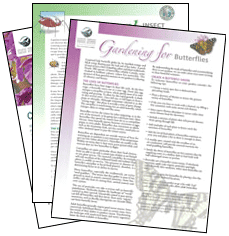
Take a closer look at the ways in which we’ll help you access the facts about wildlife. Whether it’s discovering the Hinterland Who’s Who animal fact sheets, or ordering our handy field guide to Canada’s prevalent shoreline species. This content is available to our CWF Supporters and online members. Please sign in to order your free materials.
More -
-
Wildlife E-cards
Wildlife E-cards
Send Dad a wildlife e-card! You cherish our wonderful wildlife and now you can send e-greetings that reflect your love of nature. We have developed a wide array of wildlife ecards for every occasion for you to share with your family and friends!
More -
CWF WallpapersCWF Wallpapers
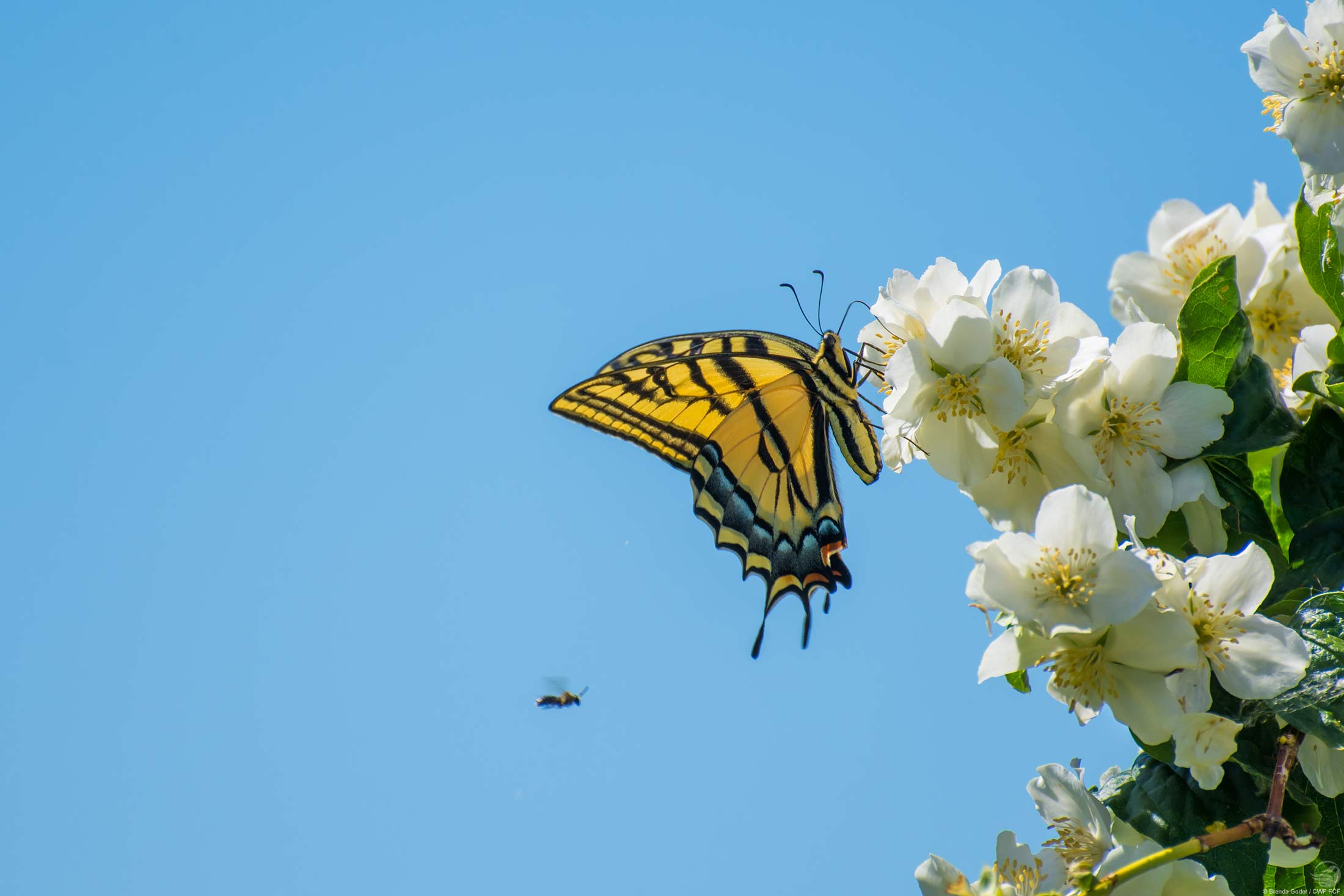
Your desktop is the perfect habitat for this wild wallpaper. Download CWF wallpapers!
More -
WILD WebinarsWILD Webinars
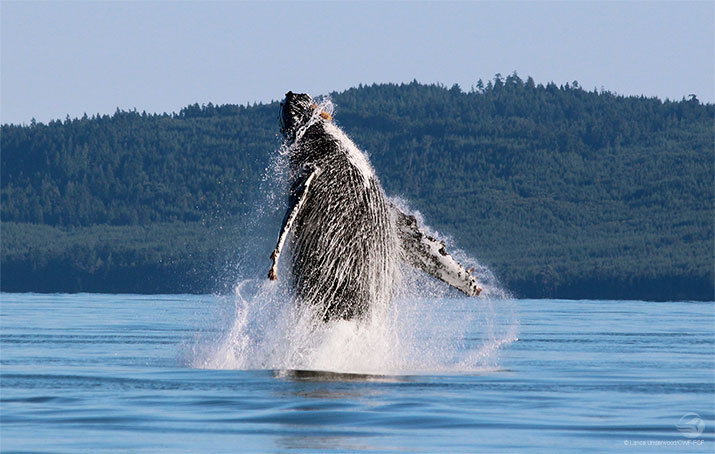
With topics relating to conservation, wildlife and habitat, we provide a relevant online learning platform, typically for grades four to six but of benefit to any age.
More

From easy-to-use apps designed as tools for your citizen science projects to picturesque wallpaper images for your computer, CanadianWildlifeFederation.ca offers a variety of useful downloads for your PC and mobile devices.
-
-
Copy of Sign up to CWF Online
2026-07-02
CWF urges Canadians to make a connection with wildlife in their everyday lives.
-
Sign up to CWF Online
2026-07-02
CWF urges Canadians to make a connection with wildlife in their everyday lives.
-
Blog
2025-11-12
-
Magazine
2025-11-12
Coasts & Oceans
-
Plastics in Our Waterways
2016-06-14
'Plastics in our waterways: how do they harm wildlife?' Join in as we discuss the types, sources and impacts of plastic pollution in Canadian aquatic ecosystems, where you can find microplastics in your home, and learn what we can do to reduce the “plastic problem.”<br>June 14<br>1:00pm
-
The Launch
2016-05-12
'The Build' webinar series has followed teacher Anthony Beer and his class on the Gaspé penisula, Québec as they have built a wooden Mirror sailing dinghy from scratch - Now it's time for 'The Launch'. <br>May 12<br>1:30pm
-
Following Leatherback Sea Turtles as they Migrate to their Southern Nesting Grounds
2016-02-28
A leatherback turtle presentation by Dr. Sean Brilliant, Manager of Marine Programs for CWF, and Kathleen James, Canadian Sea Turtle Network.
-
Marine Animal Response & Necropsy Webinar and Q&A
2020-07-20
Every year, more than 1,000 marine animal incidents are reported in Canada. Sean and Tonya will discuss the importance of responding to marine animal emergencies, and the essential conservation role you and other Canadians can play by reporting incidents. Sadly, some of these incidents have tragic endings. When a marine animal dies, a necropsy (or autopsy) can help us better understand and conserve marine wildlife. Tonya will share her experience participating in North Atlantic Right Whale necropsies, and we’ll discuss ways we can work together to conserve this important and critically endangered species.
-
Saving North Atlantic Right Whales
2020-06-08
Join the Ocean Tracking Network (OTN) and the Canadian Wildlife Federation (CWF) on World Oceans Day for a talk on the North Atlantic right whale—one of the most endangered whales in the world—that relies on the plankton-rich waters of the Maritimes, and faces dire threats from ship strikes, fishing entanglements and climate-driven changes in food sources and habitat. Historically found throughout the Atlantic Ocean, today North Atlantic right whales overwinter and calve in the south between Georgia and Northern Florida, and move north to Canada to feed in the plankton-rich waters of the Bay of Fundy, off the Scotian Shelf, and in the Gulf of St. Lawrence in the summer. After centuries of whaling, populations of some whale species have rebounded, but entanglements and ship strikes remain a serious problem for the conservation of large baleen whales, including for North Atlantic right whales. Due to human-induced stressors as well as lower calving rates since 2010, experts predict that right whales could become extinct in as little as 20 years. Tune in to learn more from Canadian Wildlife Federation’s right whale expert Sean Brillant about how we can work together to ensure a future for this iconic and critically endangered species.
Connecting With Nature
-
The Basics of Wildlife-friendly Gardening
2026-07-02
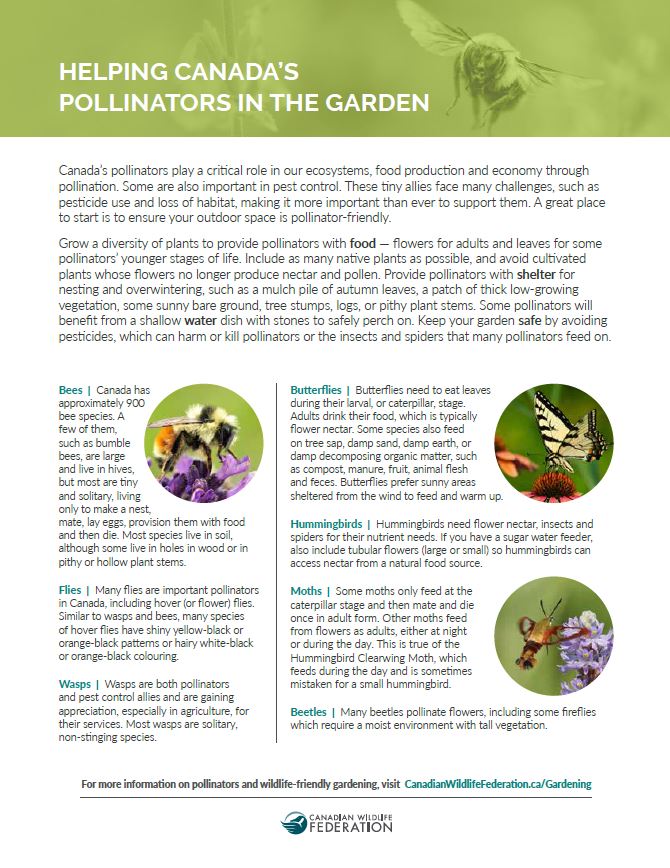
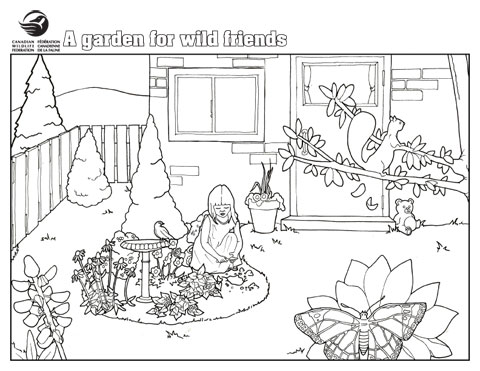
Gardening with wildlife in mind is a fantastic opportunity to not only help your garden flourish but to also support wildlife and ecosystems which provide us pollination and pest control services, among others. Best of all, it’s easy to do and beautiful too! The Canadian Wildlife Federation’s Gardening for Wildlife program has webinars, articles, tools, posters and more to help you discover, appreciate and support your local and migratory wild neighbours. CWF also has a Garden Habitat Certification where we give official recognition to those whose efforts are supporting wildlife.
-
Natural Insect Control Handout
2026-07-02
A garden is more than just plants. It may be tempting to reach for chemical pesticides. But while these products can be an effective short-term answer, they don't contribute to the long-term health of your garden.
-
What to do if you hook a turtle
2019-05-30
Ontario’s turtles are in decline and need all the help they can get!
-
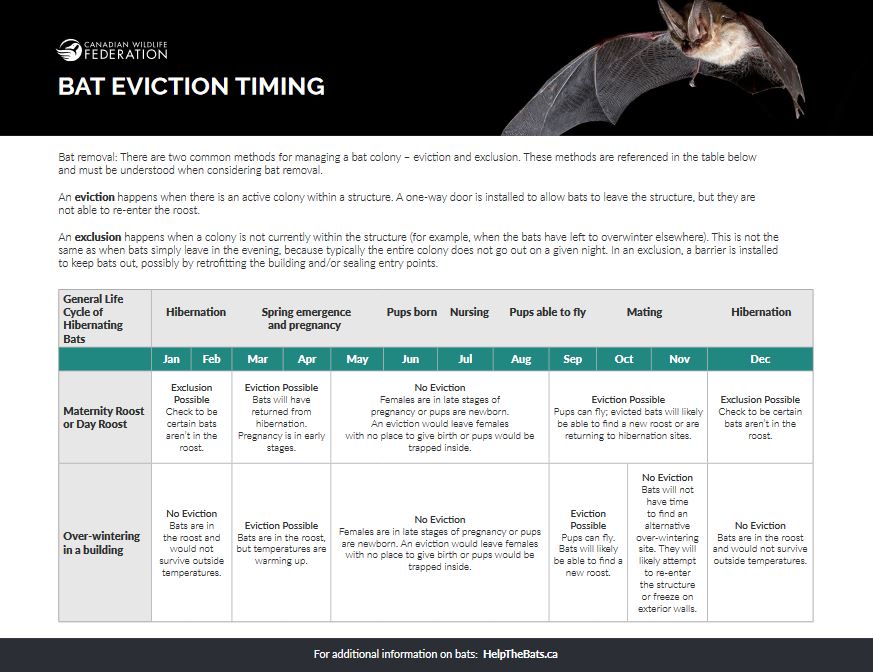
Bat Exclusion Calendar
2016-03-13
If you must exclude bats from your property, take a look at this calendar which outlines the most and least desirable times to do so.
Education & Leadership
-
-
How do we use the ocean?
2013-02-28
Dr. Sean Brillant continues his webinar series, talking to classes about how we use the ocean, and relating that information to the Africa to America's row, crossing the Atlantic ocean right now!
-
What does the Mississippi look like?
2015-11-02
What does the Mississippi look like? Exploring the river from top to bottom. Author and Adventurer, Jordan Hanssen, will take students on a journey beyond the part of the Mississippi most familiar with students, showing them the diversity of its 2,350 miles. From a trickle at its headwaters to its mighty mouth bringing in the story of the river and how it appears in almost everything they will study in the classroom and labs.<strong><br>Nov.2, 2015<br>1pm</strong>
-
Bike for Wildlife Webinar
2013-11-20
CWF Athlete Ambassador Angella Goran biked over 7,500km across Canada raising awareness for wildlife conservation. Departing in Victoria, BC on August 14th, Angella just concluded this incredible journey October 30th in Halifax, NS. Along her trek, Angella visited schools and shared stories of the ride where she highlighted the importance of getting outside and connecting with nature. CWF and Angella invite classrooms across Canada to join her in a live webinar where students can learn about the Bike for Wildlife and have the opportunity to interact with Angella. During the webinar, Angella will be speaking about the following: • Bike for Wildlife and her experience • How the Bike for Wildlife supports wildlife conservation in Canada • The importance of being outside • The importance of connecting with nature • Q&A Suggested audience: Grades 3 through 8
-
Ocean Habitats and Wildlife Webinar
2013-02-27
Dr. Sean Brillant continues his webinar series, talking to classes about Ocean Habitats and Wildlife as they relate to the Africa to America's row, crossing the Atlantic ocean right now!
Endangered Species & Biodiversity
-
Gardening for Butterflies Handout
2026-07-02
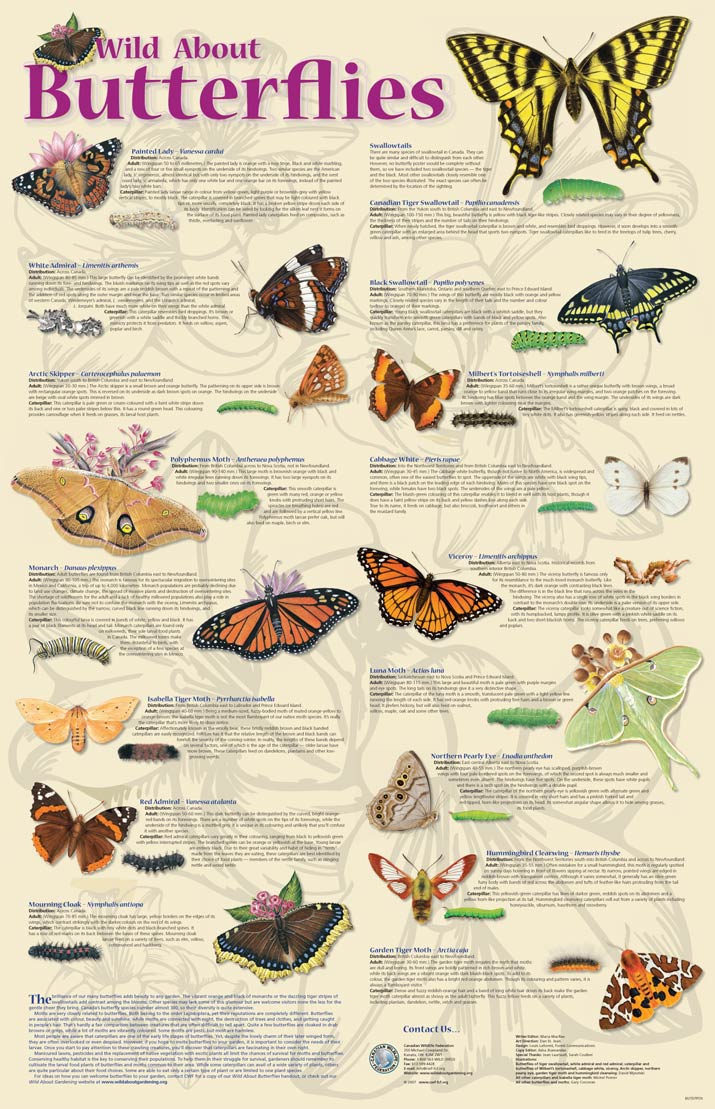
Nearly 300 species of butterflies inhabit Canada, some cloaked in brilliant colours, others less noticeable. The presence of these graceful creatures in our gardens is a blessing of vibrancy and beauty.
-
How To Build a Turtle Nesting Site
2026-07-02
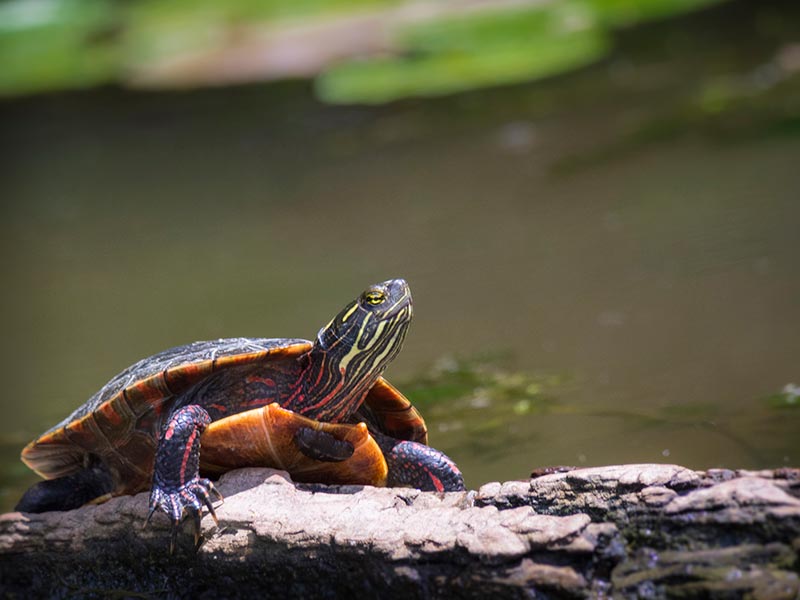
Sometimes turtles nest in problem areas like gardens, driveways or compost piles. To encourage turtles to nest elsewhere, or to create nesting habitat if it is lacking, consider building a nesting site. Keep in mind that turtles will often return to sites where they have nested before, so it may take a few seasons before a new site is used. We also recommend having nest protectors ready to protect any nests laid.
-
Make a Monarch Butterfly Garden
2020-04-01
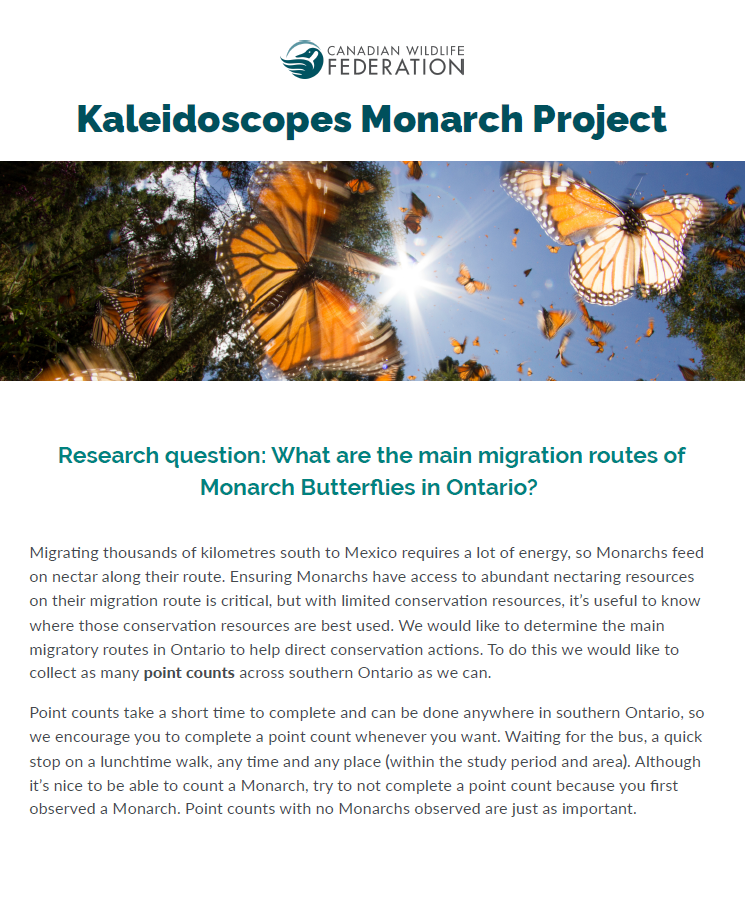
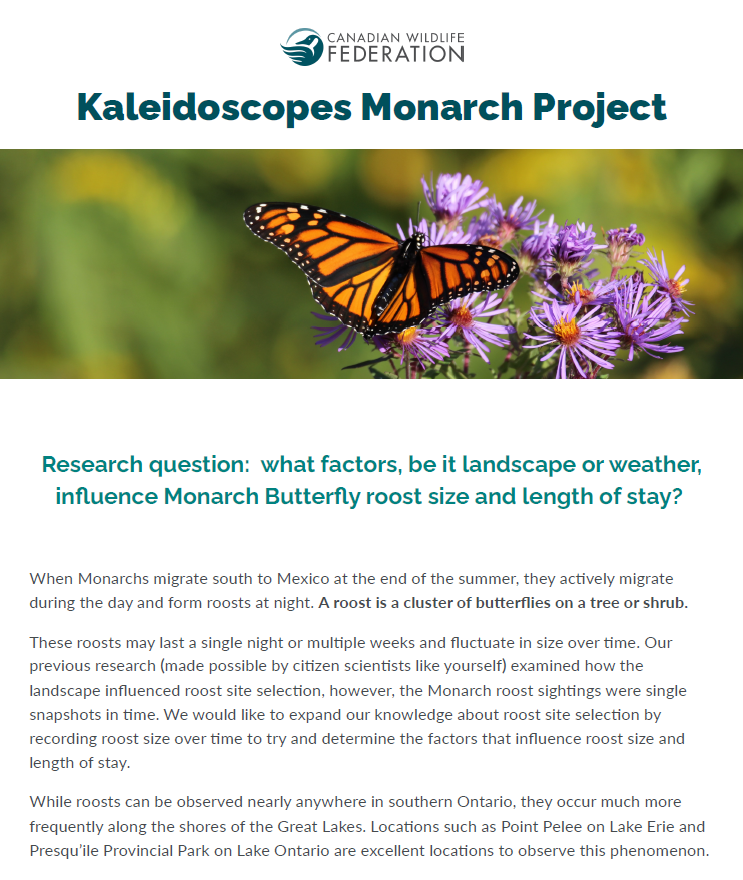
The Monarch Butterfly is a species that doesn’t stay in Canada for the winter — it flies as far as Mexico! That adds up to a migration of over 4,000 kilometres round trip (there and back). Monarchs are also listed as an endangered species on Canada’s species at risk registry, so we thought spring would be the perfect time for you to work on a project to help them! Here’s how to grow a garden they will love.
-
BAT ROOST MONITORING
2026-07-02
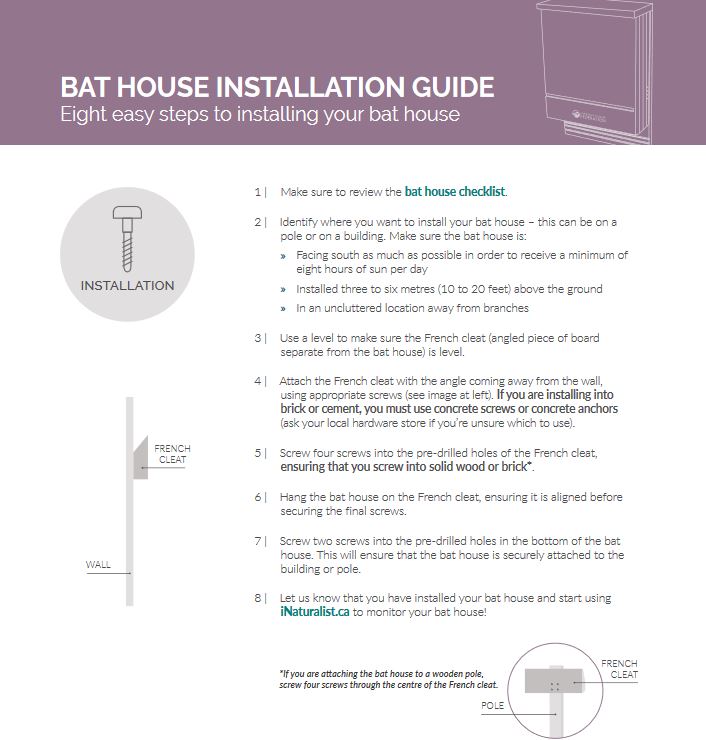
oin our “Help the Bats” project on iNaturalist.ca. You can participate as a citizen scientist by using iNaturalist.ca or the iNaturalist app (Android and iOS) to monitor your roost. The information allows us to track roost preferences and assist in a study to determine what bat house designs are optimal for Canada’s bats. To help you along, check out our step-by-step “How to Monitor Your Bat House Using iNaturalist.ca or the iNaturalist app” documents available at HelpTheBats.ca
-
The 2024 Great Canadian Bioblitz Results
2024-10-01
Forests & Fields
Lakes & Rivers
-
STOP Habitat Loss NOW! Infographic
2026-07-02
EACH YEAR THOUSANDS OF SMALL PROJECTS ACROSS CANADA DESTROY AQUATIC HABITAT AND KILL FISH AND OTHER WILDLIFE
-
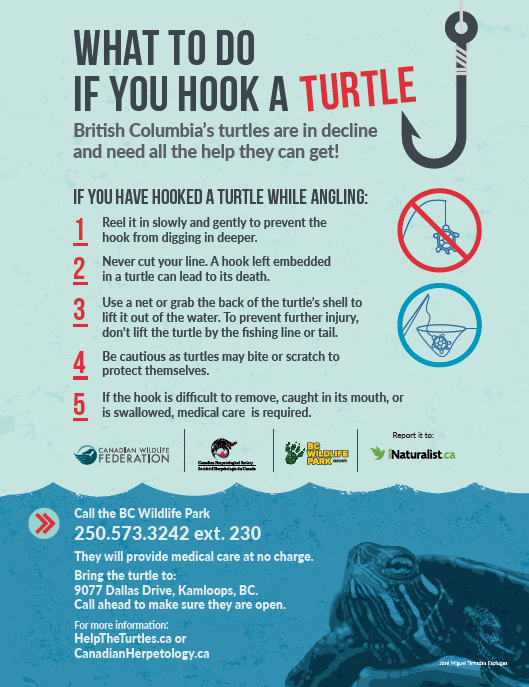
What to do if You Hook a Turtle in B.C.
2020-04-27
British Columbia’s turtles are in decline and need all the help they can get!
-
American Eel Infographic
2022-02-28
How Industry-led Endangered Species Management is FAILING the American Eel in Ontario
-
Boscar Lake Creek Culvert Removal
2023-11-16
Boscar Lake Creek connects Bosk Lake and Cruiser Lake in the Horsefly River watershed, Cariboo Chilcotin Region, British Columbia. The creek is known to support a range of fish species including Kokanee, Coho Salmon, Largescale Sucker, Longnose Sucker, Mountain Whitefish, Northern Pikeminnow, Peamouth Chub, Rainbow Trout and Redside Shiner.
-
How to Take Identifiable Photos of Fish
2026-07-02
Taking photos of wildlife can be challenging. It is not essential to photograph every point on this diagram to get an identifiable observation. Just try your best! When photographing fish, minimize air exposure by taking an underwater photo whenever possible, allowing them to breathe freely. If taking a picture outside the water, keep the fish near the water and lift it briefly for the photo, limiting air exposure to 10 seconds or less. Be sure to follow local fishing guidelines and regulations.
Learn More
- 0
- 1
- 2
- 3